Sunday Sermon: “Walking the Road with Jesus”
Readings:
- Isaiah 50:4-7
- Philippians 2:6-11
- Matthew 26:14-27:66
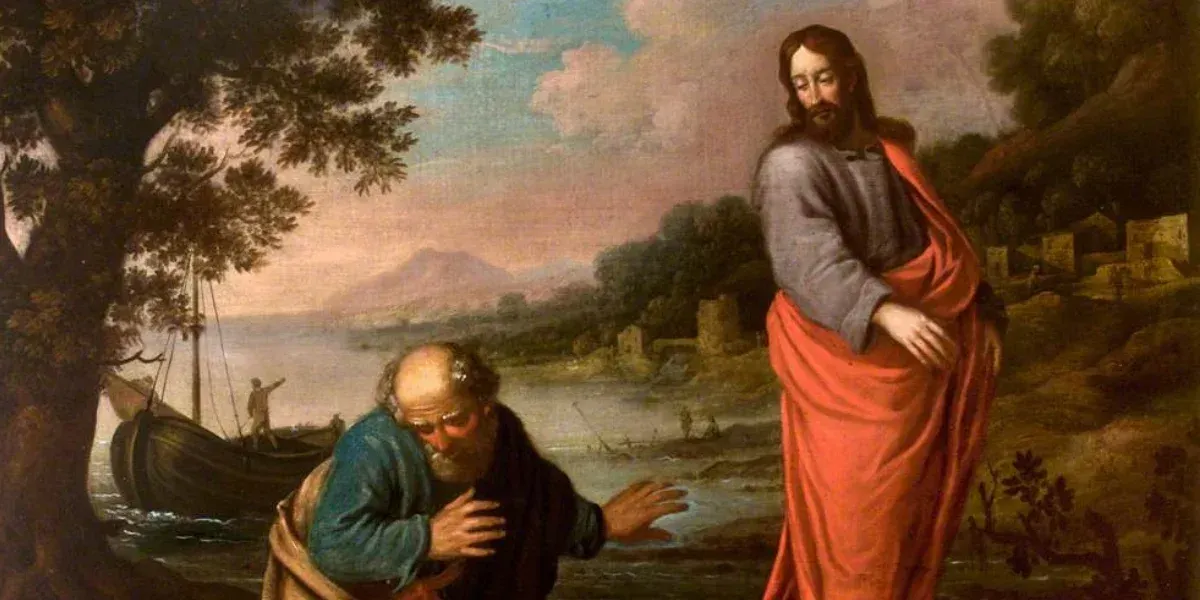
There is a small, almost unnoticed detail in the Gospels that may well be the key to understanding the whole of Holy Week. Before Jesus enters Jerusalem in triumph, before the palms are waved and the crowds cry Hosanna, there is Jericho. And in Jericho, there is a healing of a blind man, or in Saint Matthew’s account, two blind men. At the end of that scene, each Evangelist adds a quiet remark: “they followed Him,” or, as Saint Mark puts it, “he followed Him along the road.”
Along the road. That is where Palm Sunday truly begins—not in Jerusalem, but on the road behind Jesus. And that, perhaps, is where Christianity itself begins: not in admiration, not in applause, but in following.
Today, as we stand at the threshold of the Passion, the Church invites us to look again at this simple yet demanding truth: the road of Christ is also the road of His disciples.
Lent has been a journey. On the First Sunday, we renounced evil. On the Second, we professed faith. Then we discovered Christ as living water, as light, as life itself. Step by step, we have drawn closer to Him. And now, at Palm Sunday, something changes. The tone deepens. The light grows dimmer. The road becomes steeper.
Up to this point, following Jesus may have seemed beautiful, even consoling. But today we are confronted with a sobering truth: to follow Christ does not mean that life will be easy. In fact, it may mean precisely the opposite.
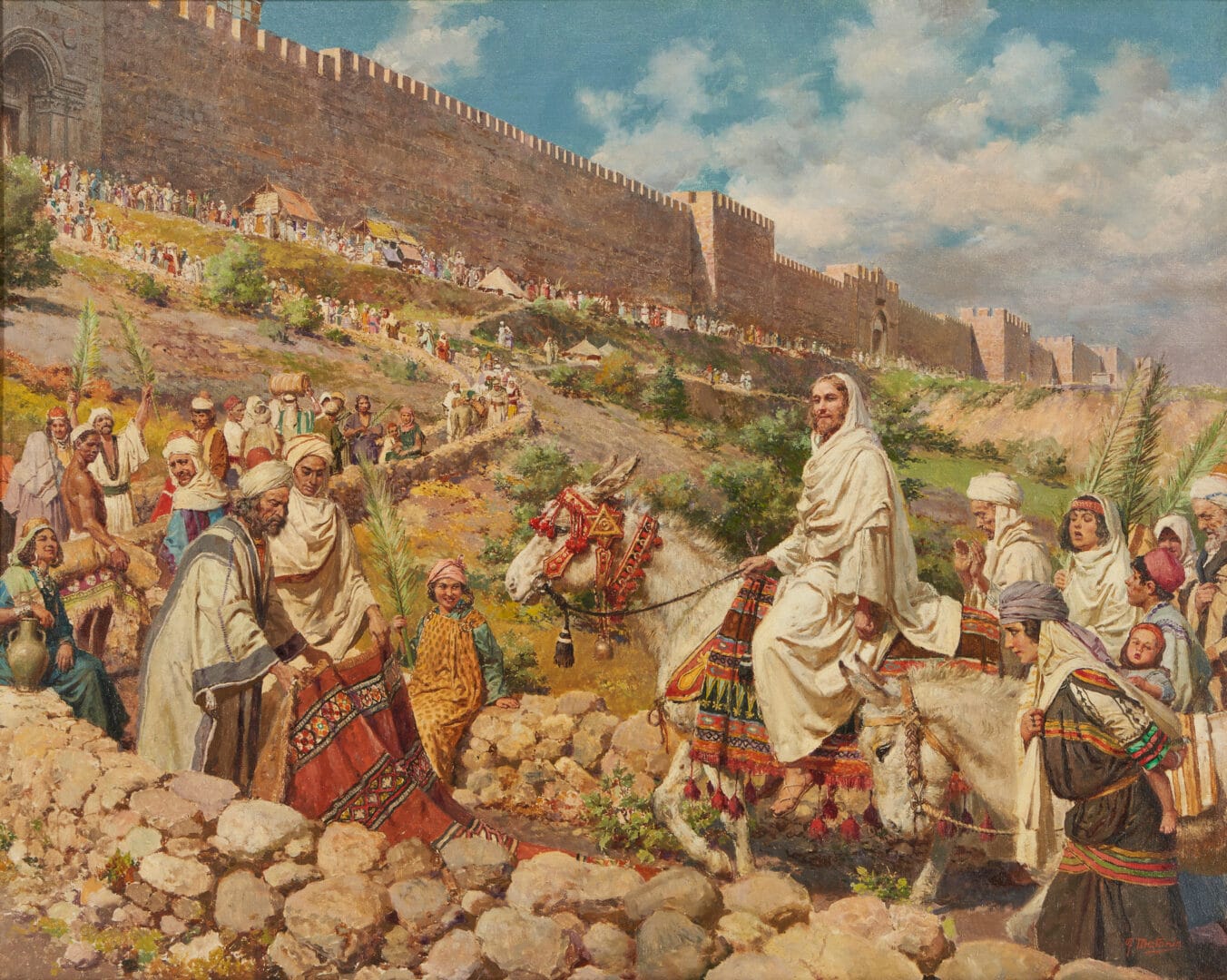
The crowds shout Hosanna—but within days, they will cry Crucify Him. The same road that leads to celebration leads also to rejection, suffering, and the Cross.
And we are asked: will we still follow?
The Servant Who Listens (Isaiah 50:4-7)
The First Reading from the prophet Isaiah introduces us to the mysterious figure of the Servant of the Lord. This Servant speaks words that are astonishingly close to the life of Christ: “I gave my back to those who struck me, my cheeks to those who pulled out the beard; I did not hide my face from insult and spitting.” It is as though prophet Isaiah had stood beneath the Cross centuries before it was raised.
But what is most striking is not the suffering itself—it is the attitude behind it. The Servant says: “The Lord God has opened my ear… and I was not rebellious.” He listens. He obeys. He remains faithful. His mission is simple and profound: to strengthen the weary with a word. To bring comfort. To be attentive not to the noise of the world, but to the voice of God. And yet, precisely because of this fidelity, he is rejected.
Here lies a paradox at the heart of the Gospel: doing God’s will does not always lead to acceptance. Sometimes it leads to opposition. Sometimes even to suffering. Jesus lived exactly this way. He healed, taught, forgave, and uplifted. The weary found rest in Him. And yet, it was precisely this mission—this obedience to the Father—that led Him to the Cross.
Not Suffering, but Obedience (Philippians 2:6-11)
The Second Reading, from Saint Paul’s Letter to the Philippians, brings us even deeper. It is one of the most beautiful and profound texts in the New Testament—the hymn of Christ’s self-emptying (His kenosis): “He humbled Himself, becoming obedient unto death—even death on a cross.” We often focus on the physical suffering of Jesus—and rightly so. But Saint Paul shifts our attention. He does not place the emphasis on pain, but on obedience. This is crucial.
We are not saved simply because Jesus suffered. We are saved because He remained faithful. Because He did not turn away. Because He trusted the Father to the very end. His suffering is real—but it is the consequence of love, not the goal. The Cross is not a spectacle of pain; it is the ultimate expression of obedience and trust.
And here we must be careful. If we misunderstand this, we might begin to imagine God as one who demands suffering, as if He delighted in it. But that is not our God revealed in Christ. The Father does not desire suffering. He desires love, fidelity, and trust.
It is the brokenness of the world—the resistance of human hearts—that turns obedience into suffering. Jesus does not seek the Cross. But neither does He flee from it. He accepts it because it is the path that faithfulness requires. And through that obedience, life is restored. Through that fidelity, salvation is given.
Faces Along the Road (Matthew 26:14-27:66)
The Passion narrative we hear today is long, intense, and deeply human. It is not only the story of Jesus—it is also a mirror in which we see ourselves.
There is Judas, blinded by his own calculations. Thirty pieces of silver—was it worth it? And yet, how often do we too trade what is sacred for something small, something fleeting?
There is Peter, full of good intentions but lacking clarity. He wants to defend Jesus, even draws a sword—but in the end, he denies Him. Not necessarily out of fear, but perhaps out of confusion, trying to manage the situation in his own way. How often do we, too, try to “help” God by compromising the truth?
There is Pilate, who knows what is right but chooses convenience. “I am innocent,” he says—yet he hands over an innocent man to be crucified. How often do we remain silent, simply to keep the peace?
There is the crowd—so easily swayed, so quick to judge, so ready to condemn. Anonymous, faceless, yet powerful. They mock, they shout, they wound.
And then there are the faithful few—the women at the Cross, Joseph of Arimathea. They cannot change what is happening, but they remain. They accompany. And sometimes, that is the greatest act of love: simply to stay.
At the heart of the Passion stands a mystery. The veil of the Temple is torn in two. The barrier between God and humanity is removed. What was once hidden is now open. The Holy of Holies is no longer inaccessible. Through the death of Christ, heaven itself is opened.
This is not merely a symbolic gesture—it is a profound theological truth. The Cross is not the end. It is the threshold. Even the earth trembles. Tombs are opened. The dead are raised. Creation itself responds. Why? Because something entirely new is happening. Death is no longer the final word.
So what does it mean to follow Jesus along the road? It means, first of all, obedience—not as blind submission, but as a trusting response to God’s will. It is easy to be faithful when it brings recognition, when it costs little. But sooner or later, fidelity will demand something more. It may lead us into difficulty, misunderstanding, even loss.
In family life, it means choosing respect and forgiveness even when wounded. In the workplace, it means refusing to compromise dignity for the sake of success. In public life, it means standing for truth—even when it is unpopular. It means resisting the temptation to judge quickly, to follow the crowd, to give in to bitterness or cynicism. It means not choosing the “easy peace” of Pilate, but the costly peace of Christ. And sometimes, it simply means staying—remaining beside someone who suffers, even when we feel powerless.
Palm Sunday places before us two processions. One is full of joy, enthusiasm, and celebration. The other leads to Calvary. The same people who walk in the first may not endure the second. And so the question is not whether we admire Jesus. It is not whether we sing Hosanna.
The question is this: Will we follow Him on the road? Will we remain when the road becomes difficult? Will we trust when we do not understand? Will we be faithful—not only in moments of light, but also in moments of darkness?
Because to walk with Jesus is to walk the road of obedience. And that road, though it passes through the Cross, always leads to life. And perhaps, like the blind man in Jericho, we begin simply—quietly, almost unnoticed. We follow Him along the road. And that is enough.
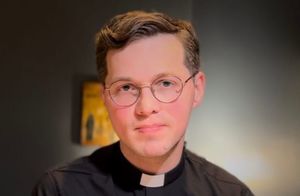
Fr Dominik Domagala
Points for personal meditation:
- First Gospel (Mt 20:34; Mk 10:52; Lk 18:43)
“He followed Him along the road”
- Where do I stand in relation to Christ: among the crowd, or truly on the road behind Him?
- What was the moment when I first “began to follow” Jesus consciously?
- Do I follow Him only when it brings consolation—or also when it leads into uncertainty?
- First Reading (Isaiah 50:4-7)
“The Lord has opened my ear”
- Do I truly listen to God, or mostly to my own fears and expectations?
- In what concrete ways is God asking for my obedience today?
- Can I accept that fidelity to God may bring misunderstanding or rejection?
- Second Reading (Philippians 2:6-11)
“He humbled Himself… becoming obedient unto death”
- Do I understand my faith more as comfort—or as a call to fidelity?
- Where is obedience costing me something real at the moment?
- Am I tempted to avoid the Cross rather than to carry it with Christ?
- Gospel (Matthew 26:14-27:66)
- In moments of weakness, am I closer to Judas (calculation), Peter (confusion), or Pilate (compromise)?
- When have I followed the crowd rather than the truth?
- Can I learn from the quiet fidelity of those who simply remained with Jesus?
“The veil of the temple was torn in two”
- Do I live as someone who truly has access to God?
- Do I approach Him with trust, or do I still keep a distance?
- What prevents me from entering more deeply into His presence?
- In my family: where am I called to forgive, even when it hurts?
- In my work: where must I choose truth over convenience?
- In society: do I stand for the Gospel, or remain silent for the sake of “peace”?
- Who around me is carrying a cross—and how can I walk with them?
- Final prayer:
O Lord Jesus Christ,
You did not choose the easy road,
but the true one.
You walked before us in humility,
in obedience,
in silence before accusation,
and in love before hatred.
Teach me to follow You—not only in words,
not only when the road is bright,
but when it darkens
and the Cross appears.
Strip from my heart all illusions,
all desire for comfort without sacrifice,
all faith without cost.
Give me the courage to stand with You
when others turn away,
to remain with You
when others are silent,
to love as You loved—
even when it wounds.
Lord, open my ears
that I may hear the voice of the Father.
Strengthen my will
that I may not turn back.
And when I falter,
when I deny You in small and hidden ways,
draw me again to Your mercy—
not to despair,
but to begin anew.
Let me walk with You this Holy Week,
not as a spectator,
but as a disciple.
So that, passing through the Cross,
I may also share in the joy of Your Resurrection.
Amen.