Mass Readings:
- Exodus 34:4-6, 8-9
- 2 Corinthians 13:11-13
- John 20:19-23
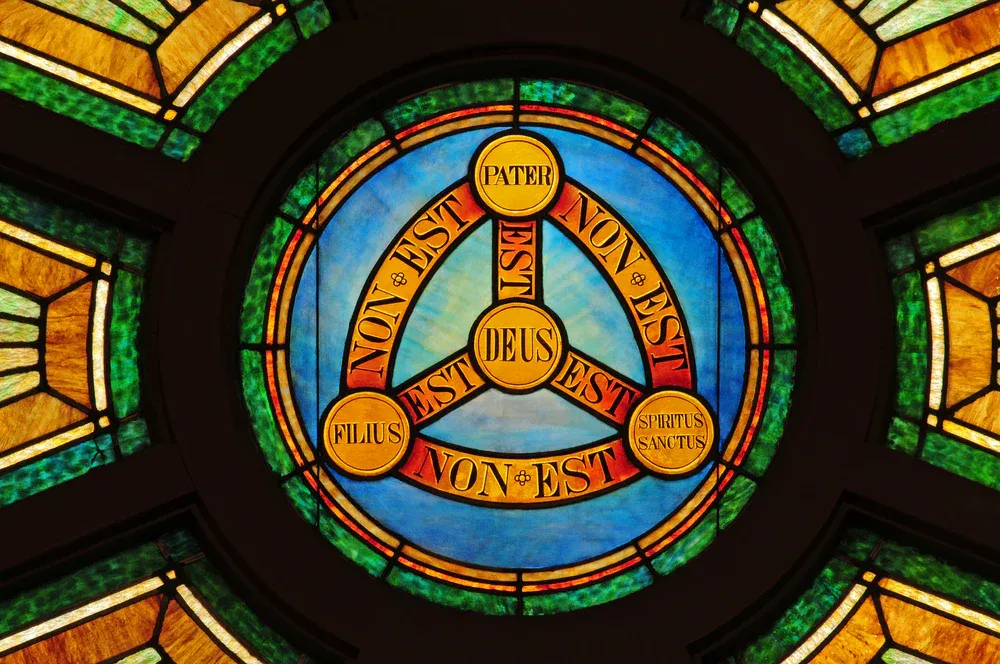
There are questions that accompany a person throughout life, quietly returning at unexpected moments. Not all of them can be answered fully, yet they remain essential. Among them is perhaps the most important question of all: Who is God? And immediately beside it: What is He really like? This is not merely a theological problem reserved for scholars. It is a deeply human question. For there is a vast distance between believing that God exists and entrusting one’s life to Him. One may accept the possibility of God intellectually and yet feel no desire whatsoever to follow Him. The decisive issue is not simply whether God exists, but whether He is Someone worthy of trust, surrender and love. The readings for Trinity Sunday do not attempt to explain the mystery of the Trinity in a mathematical or philosophical way. In truth, Christianity has never claimed that the Trinity can be reduced to a neat formula. The Church merely safeguards what has been revealed: one God in three Persons — Father, Son and Holy Spirit. As the Catechism teaches, “the divine unity is triune.” Not three gods, but one God who is communion, relationship and eternal love.
God Who Remains Faithful (Exodus 34:4-6, 8-9)
The First Reading from the Book of Exodus takes place after one of Israel’s greatest failures. The people had only recently been delivered from Egypt through astonishing acts of divine power. They had seen the plagues fall upon Egypt, crossed the sea on dry ground, eaten manna in the desert and drunk water from the rock. They had entered into Covenant with God at Sinai. And almost immediately afterwards, they betrayed Him. While Moses remained on the mountain, the people fashioned a golden calf and worshipped it. It was not merely disobedience. It was spiritual adultery. The covenant had hardly begun before it was shattered. Humanly speaking, one might expect God to abandon them. Yet He does not.
That is the astonishing heart of today’s reading. Moses ascends the mountain once again, carrying new stone tablets, and there God reveals His name and His character: “The Lord, God tender and compassionate, slow to anger, rich in kindness and faithfulness.” This is one of the most important self-descriptions of God in the entire Bible. God of Israel is not indifferent, unstable or vindictive. He is patient. Merciful. Faithful even when His people are not. And yet His love is not sentimental softness. Modern culture often reduces love to indulgence — a kind of endless approval without demands. But God revealed in Scripture is not like that. He forgives Israel, yet He still calls them to fidelity. He renews the Covenant, yet He remains holy. Real love always asks something of us. A parent who never corrects a child does not truly love. A teacher who never demands effort forms no character. And God who leads His people through the desert does not merely comfort them; He shapes them. Saint Augustine understood this tension well. Reflecting on the Trinity, he wrote that God is both “higher than my highest and more inward than my innermost self.” God is infinitely beyond us, yet also intimately close. His love is not weak affection. It is transforming fire.
Holy Trinity: Not Solitude, But Communion (2 Corinthians 13:11-13)
One of Augustine’s most famous insights into the Trinity is simple yet profound: if God is love, then within God there must eternally be lover, beloved and love itself. The Father loves the Son, the Son loves the Father, and the Holy Spirit is the eternal bond of that love. God is not a lonely ruler existing in eternal isolation. Before the world was created, before humanity existed, before there were angels or stars, there was already communion. Relationship belongs to the very heart of reality. Perhaps this is why loneliness wounds us so deeply. We were created in the image of God who is communion. We are made not for isolation but for relationship — with God and with one another.
The Second Reading from Saint Paul reflects precisely this truth. His words to the Corinthians are remarkably warm considering the tensions that existed within that troubled community: “Encourage one another, agree with one another, live in peace.” Paul does not urge Christians to fight one another in the name of righteousness. He calls them to unity. Not uniformity, certainly, but communion. This is deeply relevant in our own age. Christians today often seem tempted to behave as though the Church were primarily a battlefield. There is much talk of defending truth and fighting enemies. Some of this concern is understandable. The world is indeed confused. But Christians must be careful not to adopt the spirit of permanent hostility. The Church is not meant to resemble an army camp fuelled by resentment. She is meant to reflect the inner life of the Trinity itself: unity, charity and truth held together.
God So Loved the World (John 3:16-18)
The Gospel gives us perhaps the most famous sentence in all of Scripture: “For God so loved the world that he gave his only Son.” These words are so familiar that we risk no longer hearing their scandal. God gives His Son not to condemn the world, but to save it. Saint John’s Gospel repeatedly uses the word world (greek: kosmos) in a paradoxical way. The world is loved by God because He created it. Yet the world is also the place that rejects Him. God does not love humanity because it is already good and holy. He loves humanity in its brokenness.
And here we must be careful. Christian faith does not claim that every path leads automatically to salvation. Jesus speaks very plainly: whoever refuses the Son remains under judgment already. Yet even this judgment is not presented as arbitrary punishment imposed from outside. In Saint John’s Gospel, judgment reveals what already exists within the human heart. One might compare it to a rescue boat sent toward a sinking ship. The tragedy lies not in the existence of the rescue, but in refusing to board it. Faith, therefore, is not merely intellectual agreement with religious propositions. In the biblical sense, faith means entrusting oneself entirely to Christ. It means allowing one’s life to be reshaped by Him. This is why, as Catholics, we insist that faith must “work through love,” as Saint Paul says. A faith without conversion, without charity, without struggle against sin becomes empty words.
Perhaps one of the greatest spiritual dangers today is the creation of false images of God. Every person either approaches or rejects God according to the image of Him they carry within themselves. If God is imagined merely as an angry judge, many will flee from Him in fear. If He is reduced to vague permissiveness, others will treat Him with indifference. The Christian revelation refuses both distortions. God is infinitely merciful, yet never trivialises evil. He forgives sinners, yet still calls them to conversion. He loves humanity enough to die for it, yet asks humanity to take up the cross and follow Him. Sadly, Christians themselves sometimes distort God’s image before the world. We can speak as though God automatically blesses our political loyalties, our anger or our divisions. We sometimes use religious symbols as weapons in ideological battles rather than signs pointing beyond ourselves to Christ. And yet, there are times when the disciples of Christ should be willing to suffer humiliation personally rather than allow the Gospel to become entangled with pride, aggression or vanity. The holiness of God demands humility from us.
The mystery of the Trinity is ultimately not a puzzle to solve but a life into which we are invited. At every Mass we begin in the name of the Father, and of the Son, and of the Holy Spirit. Many Christians make the Sign of the Cross almost absent-mindedly, forgetting what it truly means. It is the mark of a person drawn into the very life of God: the Father creates, the Son redeems, and the Holy Spirit sanctifies. And yet the work of the Trinity is always one. The Father sends the Son. The Son reveals the Father. The Spirit unites us to both. Saint Augustine spent years trying to understand this mystery. According to a famous story, while walking by the sea and reflecting on the Trinity, he saw a child attempting to pour the entire ocean into a small hole in the sand. Augustine realised then that the human mind can no more contain the fullness of God than a tiny hole can contain the sea. And yet God has revealed enough for us to know this: at the heart of reality is not chaos, violence or loneliness, but eternal love. The Trinity tells us that we were not created by accident, nor abandoned to meaninglessness. We come from love, we are sustained by love, and we are called toward eternal communion with our loving God.
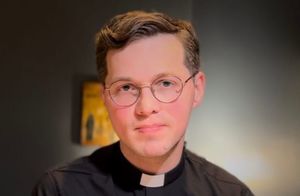
Fr. Dominik Domagala acquired a Master's in History of Liturgy and obtained a Licentiate in Sacred Scripture at St Patrick’s College in Maynooth. His main interests concern the OT and Books of Maccabees. He is the author of “The Social Sermon” blog on Facebook, Instagram and YouTube.