Mass Readings:
- Acts 8:5-8,14-17
- 1 Peter 3:15-18
- John 14:15-21
At first glance, the readings of this Sunday seem to stand apart from one another. In one, we witness the extraordinary power that accompanied the first disciples—healings, liberation, visible signs of divine action. In another, we hear a call to endure suffering patiently, even injustice, without retaliation. And in the Gospel, Christ speaks of love, obedience, and a mysterious union between himself, the Father, and his followers. Power, endurance, union—what binds them together? Everything, if we read attentively. For the liturgy today offers us not three separate ideas, but one coherent vision: the source of Christian strength. It answers a question that is as urgent today as it was in the beginning—what gives believers their power? And perhaps more pointedly: why does that power so often seem absent in our own time?
The Church scattered—and strengthened (Acts 2:14, 36-41)
The First Reading places us at a dramatic turning point in the life of the early Church. The community in Jerusalem had begun to grow and stabilise, but suddenly everything changes. Stephen, one of the first deacons, is brutally stoned to death. His martyrdom unleashes a wave of persecution. Fear spreads. The disciples scatter. From a human perspective, this looks like collapse. Yet the opposite happens. Those who flee Jerusalem do not abandon their faith—they carry it with them. What was meant to suppress the Gospel becomes the very means of its expansion. Like a spark scattered by the wind, the message of Christ spreads beyond its original boundaries.
Philip, one of the seven deacons, finds himself in Samaria—a region long marked by tension and mistrust between Jews and Samaritans. And there, without hesitation, he begins to proclaim Christ. What follows is extraordinary. People are freed from evil spirits. The sick are healed. Joy spreads through the city. Something visibly changes—not only in individuals, but in the atmosphere itself.
So striking are these events that even Simon the Magician, a man accustomed to impressing others with his own abilities, is overwhelmed. He recognises that this is not a higher form of magic, not a technique to be mastered or purchased. It is something altogether different. It is the power of God. And when Peter and John arrive, they confirm this work by laying hands on the newly baptised, who then receive the Holy Spirit. Already, we see the structure of the Church emerging—not as a human invention, but as a living organism, guided and sustained by divine life.
There is a quiet but important lesson here. Philip was not one of the Twelve. He had been appointed to serve—to attend to practical needs within the community. Yet he does not see this as a limitation. He preaches, he acts, he trusts. How different this is from our own frequent hesitation. How often do we assume that faith is someone else’s responsibility? That proclamation belongs to specialists, to clergy, to those “better prepared”? The early Christians did not think in such terms. Faith, for them, was not delegated—it was lived.
The paradox of strength (1 Peter 3:15-18)
Yet the story does not end with visible success. The Second Reading introduces a necessary balance. Saint Peter writes to Christians who are not experiencing triumph, but hardship. They are misunderstood, marginalised, even mistreated. And his instruction is striking: “Always be ready to give an answer for the hope that is in you—but do it with gentleness and respect.”
Gentleness is not a word that easily associates with power. And yet, in the Christian vision, it is essential. Peter does not tell believers to withdraw, nor to abandon truth. They are to give an answer—to speak, to witness, to explain their hope. But they are to do so in a way that reflects Christ himself. For Christ did not conquer by force: “He suffered for sins once for all, the righteous for the unrighteous, that he might bring us to God.” Here lies the paradox at the heart of Christianity: true strength is revealed not in domination, but in self-giving. Not in overpowering others, but in remaining faithful under pressure.
This is perhaps one of the most challenging aspects of Christian life today. We live in a culture where reaction is immediate, where aggression often meets aggression, where the loudest voice is mistaken for the strongest. And yet the Gospel proposes another way. To remain firm without becoming harsh. To defend truth without abandoning charity. To endure without surrendering to bitterness. This is not weakness. It is discipline. It is strength rooted not in self-assertion, but in something deeper.
The source of everything (John 14:15-21)
And this brings us to the Gospel, where that “something deeper” is finally revealed. We are listening to part of Christ’s farewell discourse—a kind of spiritual testament given to his disciples before his Passion. Here, Jesus does not offer strategies or instructions in the usual sense. Instead, he reveals the foundation of Christian existence. Again and again, one theme returns: union: “I am in my Father, and you are in me, and I am in you.” These words are not symbolic exaggerations. They express a real and transformative relationship. To belong to Christ is not simply to follow him externally, but to share in his very life. God is no longer distant. He is not confined to a temple, nor encountered only in moments of ritual. He comes to dwell within the believer: “If anyone loves me… my Father will love him, and we will come to him and make our home with him.” This is a statement of astonishing intimacy.
The Old Testament speaks of God visiting his people, dwelling among them in sacred spaces. But here, the promise goes further: God makes his dwelling within the human person. This is the hidden source of Christian power. Not organisation, influence or numbers, but the presence of God within.
And this presence is made possible through the Holy Spirit, whom Jesus calls the Spirit of truth and the Paraclete—the Advocate. Let us remember this: the Spirit does not replace Christ’s teaching; he brings it to life. He reminds, illuminates, and enables the believer to live the Gospel in ever-changing circumstances. As Advocate, he stands beside us—strengthening, guiding, and defending. It is this presence that explains everything we have seen. It explains the courage of Philip. It explains the endurance urged by Peter. It explains the transformation of ordinary men and women into witnesses capable of changing the world. Without this presence, Christianity becomes effort. With it, Christianity becomes life.
And so we arrive at the central question. What does it mean to be a “radical” Christian? It does not mean extremism. It does not mean outward intensity or visible activism. It does not even mean extraordinary achievements. At its core, it means one thing: love: “If you love me, you will keep my commandments.” And Christ’s commandment is clear: “Love one another as I have loved you.” This is the measure of everything. Not how convincingly we argue. Not how forcefully we defend our position. Not how successful we appear. But how we love. Even when it is inconvenient, costly and not returned. From this perspective, victory takes on a new meaning. Christians do not truly prevail when they secure influence, or recognition, or favourable conditions—valuable though these may be. They prevail when they remain faithful to love. When they refuse to hate. When they refuse to distort truth. When they refuse to abandon the way of Christ, even under pressure. And this is not a lesser victory. It is the only one that endures.
The first Christians astonished their world. Not simply by what they did, but by who they were. They lived from a source that others could not see, but could not deny. They were united with God. And from that union flowed a power unlike any other—a power not to dominate, but to transform; not to control, but to persevere; not to conquer outwardly, but to save from within. That same power has not disappeared. The question is whether we are willing to live from its source. For in the end, the strength of radical Christians has never been their own. It has always been—quiet, hidden, and decisive—the very life of God dwelling within them.
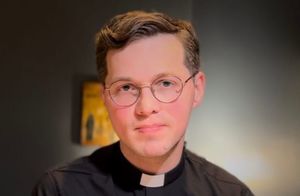
Fr Dominik Domagala
Fr. Dominik Domagala acquired a Master's in History of Liturgy and obtained a Licentiate in Sacred Scripture at St Patrick’s College in Maynooth. His main interests concern the OT and Books of Maccabees. He is the author of “The Social Sermon” blog on Facebook, Instagram and YouTube. Check out more at the new website: thesocialsermon.com