
Mass Readings:
- Apocalypse 7:2-4, 9-14
- 1 John 3:1-3
- Matthew 5:1-12a
Imagine advertising a new way to happiness by promising people poverty, grief, meekness, hunger and persecution. One would hardly expect the queue to stretch around the block. Yet this is precisely how Jesus begins His most famous sermon. On the mountain, surrounded by His disciples and the crowds, He declares: “Blessed are the poor in spirit”, “Blessed are those who mourn” and even “Blessed are those who are persecuted in the cause of right.” At first hearing, the words sound almost deliberately contrary to common sense. We spend much of our lives trying to avoid precisely these experiences. We seek security rather than poverty, consolation rather than grief, recognition rather than humiliation, and peace rather than persecution. Yet, on the Solemnity of All Saints, the Church places these extraordinary words before us because they reveal something the world often fails to understand: happiness is not the same as having an easy life. The saints discovered this truth. They were not people who escaped suffering, disappointment or the struggles of ordinary human existence. They were people who learned to look beyond them, trusting that God's promises were more enduring than any earthly reward. Today's readings invite us to discover why Christ calls such people blessed, what their destiny reveals about our own, and how the path to holiness begins in the circumstances of our lives today.
A Great Multitude Before the Throne (Apocalypse 7:2-4, 9-14)
The first reading, from the Book of Revelation, offers one of the most beautiful biblical images of heaven. St John sees a great multitude standing before the throne of God and before the Lamb, clothed in white robes and holding palm branches in their hands. They come from every nation, race, people and language, and together they proclaim the salvation that comes from God and from the Lamb. Before this heavenly scene, however, John describes the sealing of God's servants. The number of those sealed is given as 144,000, drawn from the twelve tribes of Israel. This figure should not be understood as a literal census of those who will be saved. Its symbolic construction — twelve multiplied by twelve and then by a thousand — expresses fullness and abundance. The twelve tribes of Israel and the twelve Apostles point towards the fullness of God's people, gathered from the Old and New Covenants. The seal itself signifies belonging. Those who are sealed belong to God. This does not mean that they will be spared every earthly misfortune, persecution or even martyrdom. Indeed, the great multitude in John's vision has come through the great tribulation. Their garments have been washed white in the blood of the Lamb — a striking image of the purification and victory made possible through Christ's sacrifice. Here lies an important distinction: God does not promise that His faithful will be spared suffering or death; He promises that neither suffering nor death will have the final word. The saints are not people who escaped the difficulties of earthly life, but those who remained faithful to Christ through them.
The vision continues with a promise that deserves particular attention. Although the liturgical reading ends before these words, the following verses describe the destiny of the redeemed: God spreads His tent over them; they will no longer hunger or thirst; the Lamb will lead them to springs of living water, and God will wipe away every tear from their eyes. This is a beautiful description of heaven. The image of God's tent recalls the dwelling of the Lord among His people during Israel's journey through the wilderness. In heaven, that closeness will no longer be temporary or incomplete. The redeemed will live in the permanent presence of God, where suffering, deprivation and sorrow will finally come to an end. The saints are happy not simply because their earthly struggles have finished, but because they have entered into the fullness of life with God.
Children of God — Already, but Not Yet (1 John 3:1-3)
The second reading, from the First Letter of St John, brings this heavenly vision remarkably close to our present lives. “See what great love the Father has lavished on us, that we should be called children of God — and that is what we are!” These words contain one of the most profound truths of Christian faith. We are not merely creatures who stand at a distance from God, hoping to earn His favour. Through Christ, and particularly through the gift of Baptism, we have become His adopted children, incorporated into His family and given a share in His divine life. Holiness therefore does not begin only when someone is recognised as a saint after death. It begins here and now, when God's grace takes root in the human heart. John nevertheless reminds us that our present experience is not yet the fullness of what we shall become. “What we are to be in the future has not yet been revealed; all we know is, that when it is revealed, we shall be like him because we shall see him as he really is.” The Church calls this the beatific vision: the eternal happiness of those who see God face to face and enjoy His presence for ever. Heaven is not simply a place where earthly difficulties disappear. It is the fulfilment of our deepest longing, the perfect communion with the One for whom we were created. There is, however, an important consequence for our lives today. John continues by saying that everyone who has this hope makes himself pure, just as Christ is pure. In other words, the hope of heaven should change the way we live on earth. If we truly believe that we are children of God, our conduct should gradually become a reflection of the Father whose life we have received. We are not called to postpone holiness until eternity; we are called to begin living it now.
The Portrait of a Saint (Matthew 5:1-12a)
The Gospel presents us with the beginning of the Sermon on the Mount, in which Jesus proclaims the eight Beatitudes. They are sometimes described as the constitution of the Kingdom of God, because they reveal the values by which those who belong to that Kingdom should live. An important detail is easily overlooked: the Beatitudes are not formulated as commandments. Jesus does not say, “Become poor”, “make yourselves sad” or “allow yourselves to be persecuted”. He declares that those who experience these conditions can already be called blessed because of God's promises. The Greek word makarioi expresses blessedness or happiness, but this is not necessarily the happiness understood by the world. Jesus is not suggesting that poverty, grief, injustice or persecution are good in themselves. Rather, He promises that they will not have the final word. Those who mourn will be comforted; those who hunger and thirst for righteousness will be satisfied; the meek will inherit the earth. The rewards may begin to be experienced in this life, but their fullness belongs to eternity. Each Beatitude challenges our ordinary understanding of success. The world admires wealth, influence, power and the ability to impose one's will upon others. Jesus, however, speaks of poverty of spirit, meekness, mercy, purity of heart and peacemaking. The saints are those who discover that the values of God's Kingdom are more enduring than the rewards offered by the world. Poverty of spirit, for example, is not simply a matter of possessing little. It concerns our relationship with what we possess. A person may have considerable wealth yet remain detached from it, while someone with very little may be consumed by the desire for more. The poor in spirit are those who recognise their dependence upon God and refuse to make earthly possessions the centre of their existence. Similarly, the meek are not simply timid people who lack the courage to defend themselves. They are those who refuse to make aggression and self-assertion the governing principles of their lives. In a world where success often seems to belong to those with the sharpest elbows, Jesus promises that the meek will inherit the earth. They may not always win according to the world's calculations, but their inheritance is secure in God. The same applies to those who make peace. Christ does not praise people merely because they avoid disagreement or remain silent when injustice occurs. The peacemakers are those who actively seek reconciliation, resist hatred and refuse to allow every disagreement to become a battle for personal victory. They are called children of God because their lives begin to resemble the Father, who desires reconciliation with His children.
One Family Beyond Death
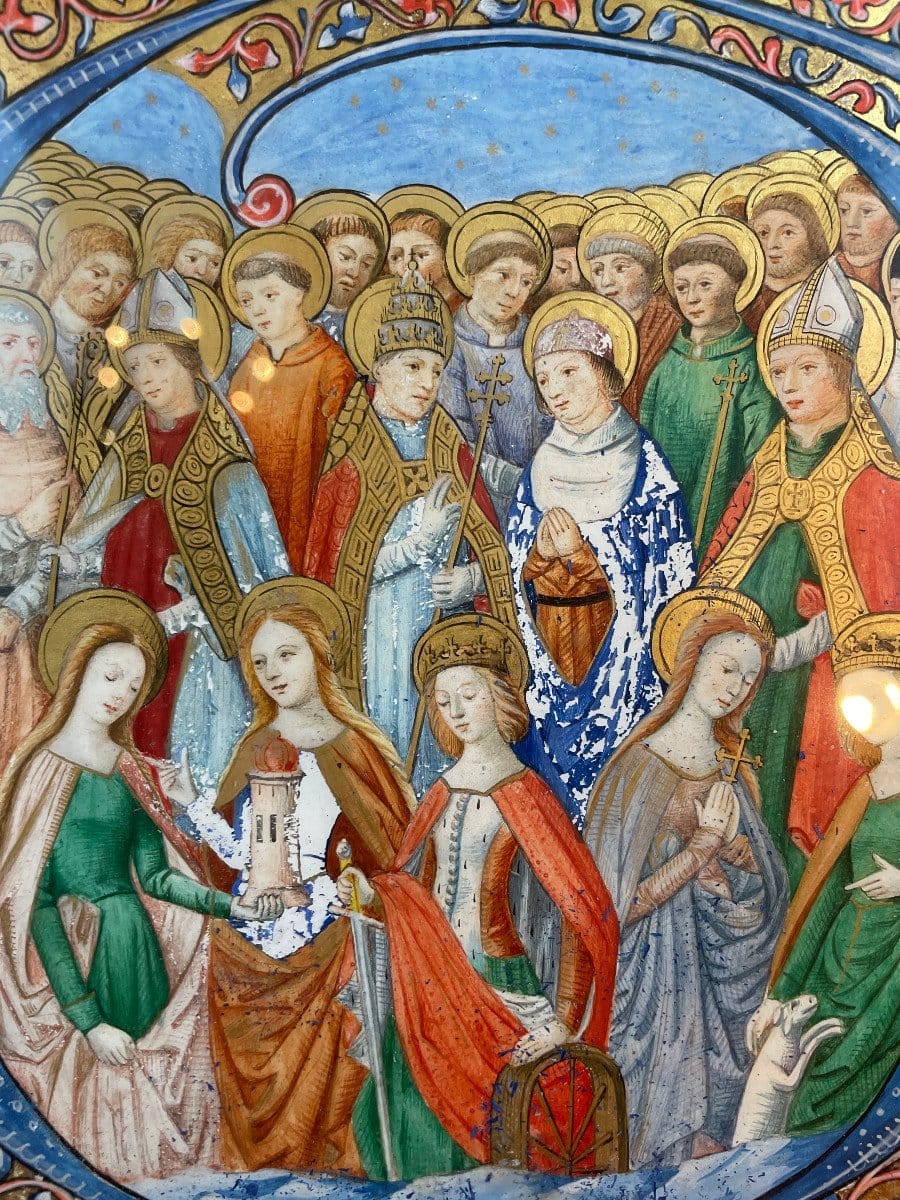
The Solemnity of All Saints also leads naturally to tomorrow's Commemoration of All the Faithful Departed. The two celebrations remind us of the Catholic understanding of the communion of saints: the Church is one family in Christ, embracing those who are already in heaven, those undergoing purification and those still making their earthly pilgrimage. All Saints celebrates the multitude who have attained the glory of God, not merely the well-known figures whose names appear in the liturgical calendar. All Souls, in turn, reminds us to pray for the faithful departed who still need purification before entering the fullness of heavenly joy. We remain united with them through Christ, whose victory over death makes this communion possible. This is why the saints are not simply historical figures whom we admire from a distance. They belong to our family, and their lives demonstrate what God's grace can accomplish in ordinary human beings. Their example encourages us, while their prayers remind us that the Church's communion extends beyond the boundaries of earthly life.
The Beatitudes may initially sound like a strange description of happiness, but they reveal the deepest wisdom of Christian life. We do not seek suffering, nor should we remain indifferent to injustice or the needs of those who suffer. Yet we need not sacrifice our fidelity to Christ in order to secure a more comfortable existence. The saints understood that earthly success is not the final measure of a human life. They discovered that humility is greater than pride, mercy greater than revenge, purity of heart greater than cynicism, and peace greater than the satisfaction of winning an argument. Their happiness was not always visible to the world, but it was rooted in a promise that could not be taken away. The first reading assures us that God will wipe away every tear; the second reminds us that we are already His children; and the Gospel shows us the way of life that corresponds to this extraordinary calling. The sadness of this world can indeed become the singing and dancing of the Kingdom, because those who belong to Christ are destined not for the finality of death, but for the fullness of life with God. That is the happiness the world cannot give — and the happiness to which every Christian is called.
Fr. Dominik Domagala