
Mass Readings:
- Exodus 22:20-26
- 1 Thessalonians 1:5-10
- Matthew 22:34-40
There is an old joke about Stalin, a child and a radio commentator. A child approaches the Soviet dictator and asks, “Comrade Stalin, will you give me a sweet?” Stalin replies with an abrupt command to go away. The radio commentator then announces, with remarkable enthusiasm, “He could have had him killed!” This joke works because it exposes a peculiar human tendency: we can become so accustomed to praising someone's supposed virtues that we begin to interpret even their absence as evidence of excellence. The boor who ridicules others may congratulate himself on his splendid sense of humour, while the person who prides himself on always speaking the truth may fail to recognise that there are occasions when charity requires silence rather than an observation. The readings for this Sunday expose a similar contradiction in religious life. It is possible to know God's commandments, to defend them vigorously and even to take considerable pride in our religious convictions, while neglecting the very love that gives those commandments their purpose.
The stranger at the heart of the covenant (Exodus 22:20-26)
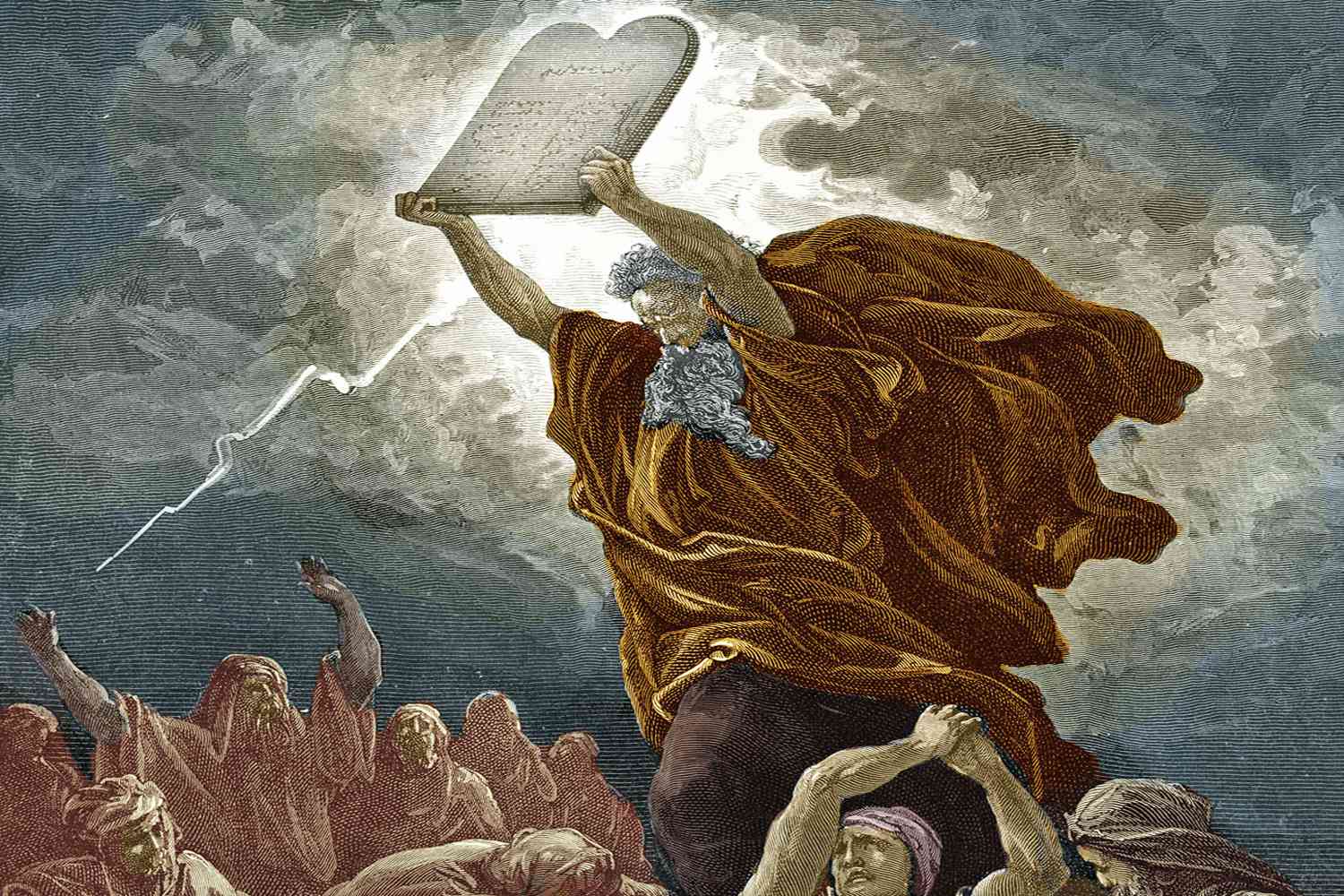
The first reading takes us back to Mount Sinai, where the Israelites, having been liberated from slavery in Egypt, entered into a covenant with God. The commandments given through Moses were not an arbitrary collection of imposed restrictions; they were the terms of a relationship initiated by divine mercy. God had acted first, rescuing Israel from oppression and promising to remain faithful to his people, who in turn were called to live according to his law. Its instructions concern the treatment of foreigners, widows, orphans and the poor, alongside other matters. The general demand to love one's neighbour is translated into concrete obligations, ensuring that nobody can hide behind a respectable appearance of religious observance while exploiting those who are least able to defend themselves. The command concerning the foreigner is especially revealing. Israel is instructed not to oppress the stranger, because the Israelites themselves had experienced what it meant to live as strangers in Egypt. Their memory of suffering was supposed to become a source of compassion rather than a justification for indifference. Having received mercy, they were expected to extend mercy to others. This is an enduring lesson for Christian society. Human dignity does not depend upon a person's influence, usefulness, wealth or ability to return a favour. Nor can the demands of charity be restricted to those who belong to our own family, community or political camp. The covenant teaches Israel that its relationship with God must transform its relationships with other people; the Christian, who has received the still greater gift of redemption in Christ, cannot reasonably expect less of himself.
When faith becomes a witness (1 Thessalonians 1:5-10)
The second reading, from St Paul's First Letter to the Thessalonians, continues this theme by showing what happens when the Gospel is received genuinely. Paul praises the Thessalonians because they accepted the message he preached, became imitators of the Lord and, despite suffering, experienced the joy given by the Holy Spirit. Their conversion did not remain a private conviction but became a public witness, so that the news of their faith spread throughout Macedonia and Achaia. Paul describes their transformation as a turning away from idols towards the living and true God. In the ancient world, idols were not simply statues; they represented the attempt to locate ultimate security and meaning in something other than the Creator. Although modern people may not worship carved images, the temptation remains familiar whenever money, status, political power or personal success is treated as the highest good. To turn towards the living God means more than accepting his existence. It means entering his service, allowing his will to challenge our ambitions and permitting the Gospel to reshape our behaviour. Paul therefore connects conversion with imitation: the Thessalonians have received the faith, and now their lives must increasingly resemble the life of Christ. The question arises whether our own lives make that faith credible. When people encounter Christians, do they discover greater patience, honesty, generosity and mercy, or do they find the same rivalries, resentments and self-interest that characterise life without the Gospel? We cannot control the decisions others make about religion, but we should be willing to examine whether our conduct has helped them recognise the goodness of God whom we claim to serve.
The two commandments that cannot be separated (Matthew 22:34-40)
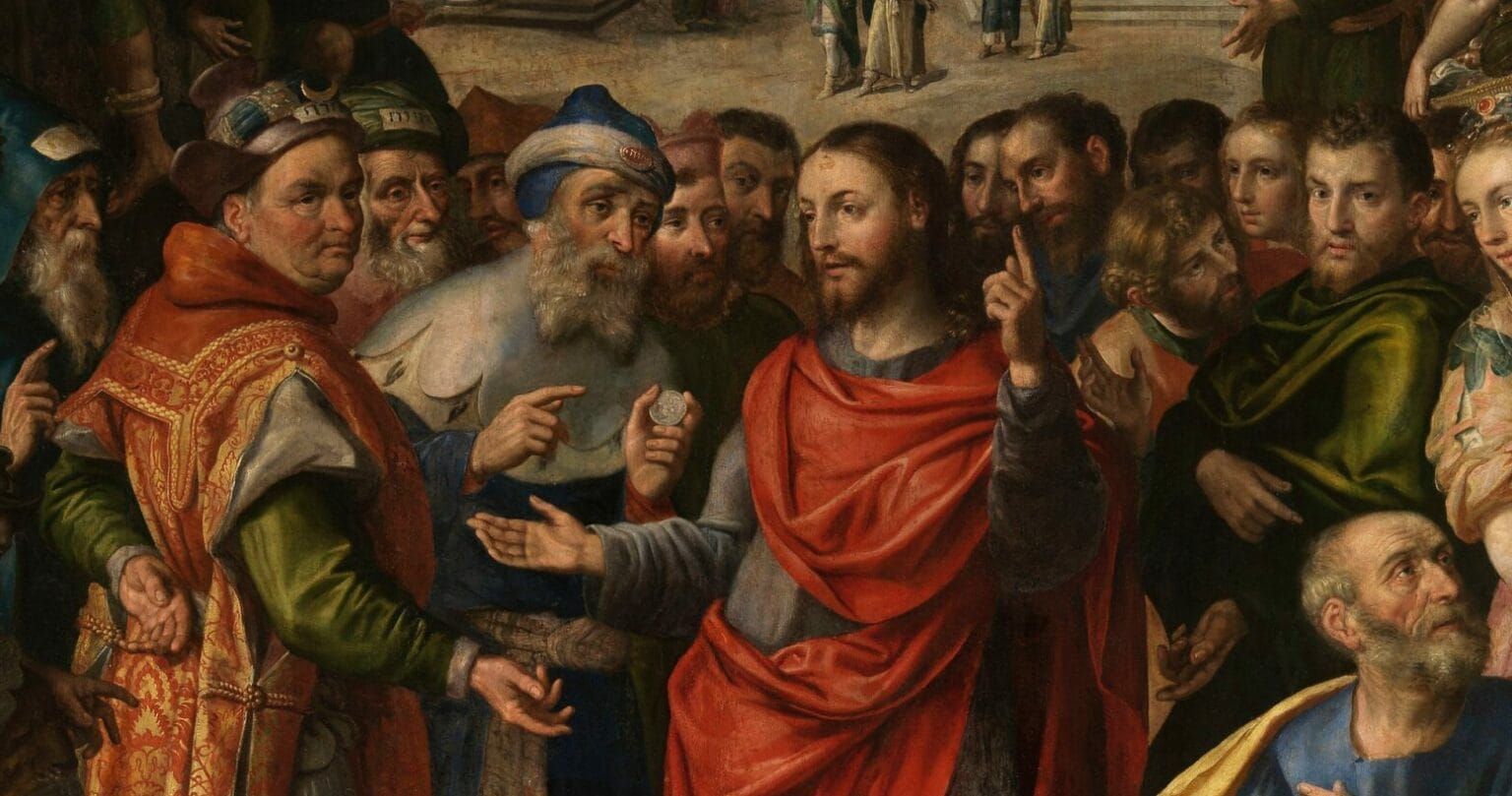
The Gospel presents Jesus in conversation with a lawyer who asks him which commandment in the Law is the greatest. The question arises amid an increasingly bitter confrontation between Jesus and the religious authorities in Jerusalem, and Matthew tells us that the questioner intends to test him. Given the complexity of the Jewish legal tradition, the question could easily have become an opportunity to accuse Jesus of neglecting one commandment in favour of another. Jewish tradition counted 613 commandments in the Torah, encompassing both positive obligations and prohibitions. Such a rich body of law required careful interpretation, and teachers naturally sought to understand how its many particular requirements belonged together. Jesus responds by bringing two passages of Scripture into a single answer: Deuteronomy 6:5, which commands Israel to love God with its whole being, and Leviticus 19:18, which commands the people to love their neighbour as themselves. His answer is both a summary and a revelation. Love of God stands at the centre of the covenant, but it cannot be separated from love of neighbour, because God whom we worship commands us to recognise and respect the dignity of those whom he has created. Equally, Christian love of neighbour is not simply a vague commitment to being pleasant; it arises from our relationship with God and is shaped by the truth about the human person that he has revealed. This is why the commandments cannot be replaced by a sentimental declaration that love is all that matters. The law gives love a definite form, while love reveals the purpose of the law. Without the commandments, we risk defining love according to our own preferences, excusing whatever suits us and condemning whatever inconveniences us. Without love, however, the commandments can be reduced to a collection of rules that we use to judge others while remaining blind to our own failures.
The saints show us what love can become
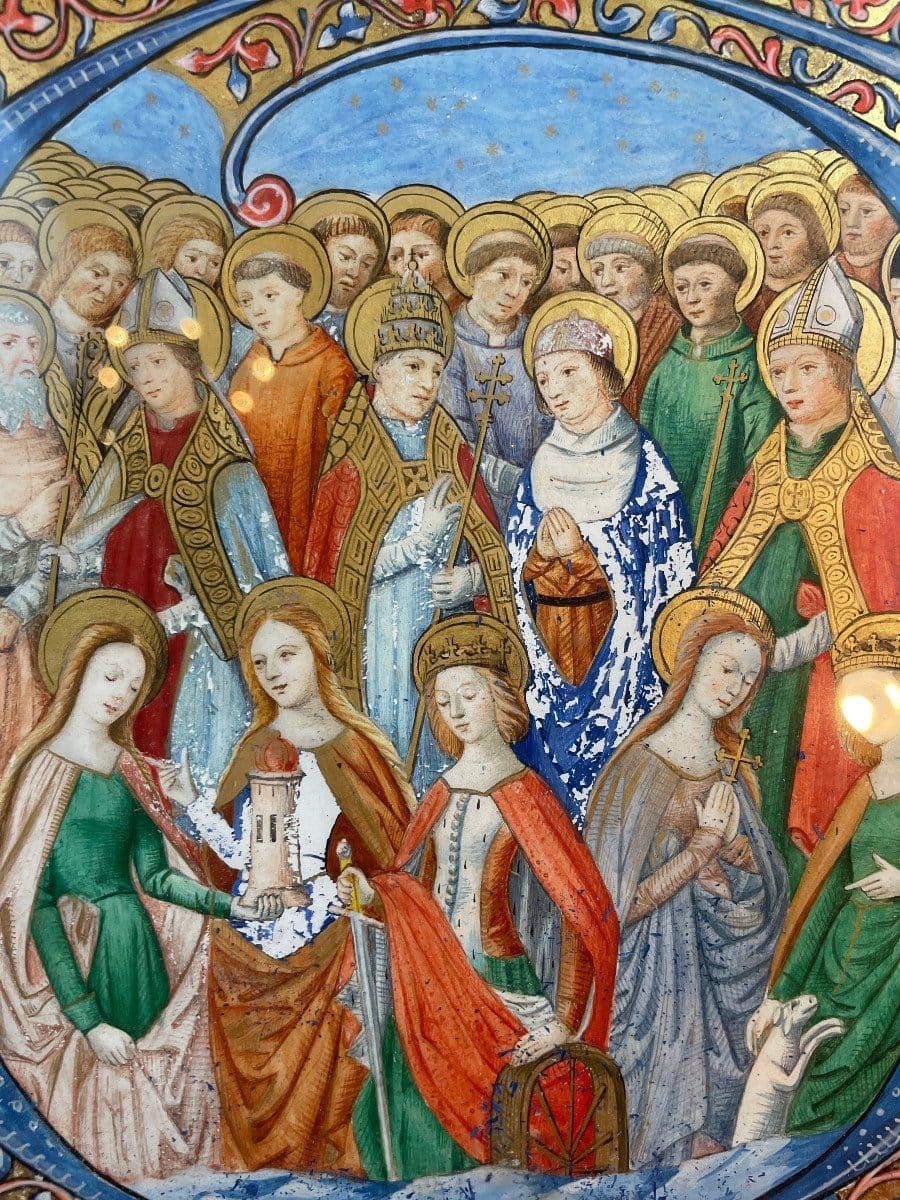
The Solemnity of All Saints, which we shall celebrate next Sunday, offers a particularly beautiful continuation of today’s teaching. The saints are not simply a collection of exceptional religious personalities whose achievements we admire from a safe distance. They are witnesses to what happens when God's grace is welcomed and the commandments of love gradually become the principle of a human life. Their circumstances were extraordinarily diverse, but what united them was their response to the grace of God, which enabled them to love him and their neighbours with increasing generosity. Effectively, All Saints should challenge the assumption that holiness belongs to a spiritual elite. In fact, every believer is called to holiness according to one's vocation and circumstances. The saints also remind us that love is not measured solely by the visibility or apparent magnitude of achievements. Its deepest measure is fidelity to God in the circumstances in which we have been placed. Their lives show us that the commandments Jesus summarises in the Gospel are not an impossible ideal, but a path made possible by grace.
The following day, on All Souls', the Church will turn our attention to the faithful departed and once again will remind us that those who belong to Christ remain united in him, even though death has separated us from them. Those who die in God's grace but still require purification before entering the fullness of heavenly glory are remembered in the Church's prayers, and we commend them to God's mercy through the offering of the Mass and other suffrages. Prayer for the dead is therefore an expression of charity, not an attempt to purchase salvation or to alter God's justice. We continue to pray because we entrust the departed to the mercy of God, whose love is greater than our understanding. All Souls' Day also reminds us that Christian love is not confined to those who can thank us, repay us or even acknowledge what we have done for them. Just as Exodus commands Israel to protect those who are vulnerable, the Church encourages us to remember those who depend upon our prayers. The living and the dead remain within the horizon of Christian charity, although the way we express that charity differs according to their circumstances.
So as we prepare to celebrate all the saints and the faithful departed, let us remember that these feasts are not isolated entries in the Church's calendar. They remind us of the faith we have received, the holiness to which we are called and the communion in Christ that sustains our hope beyond death. Above all, they return us to the commandment at the heart of the Gospel: to love God with our whole being and our neighbour as ourselves, until the grace we receive becomes the charity through which others encounter Christ in us.
fr Dominik Domagala