
Sunday Sermon: "Winning by losing - logic of Beatitudes"
Readings:
- Zephaniah 2:3, 3:12-13
- 1 Corinthians 1:26-31
- Matthew 5:1-12a
“Stand your ground.” That is one of the great commandments of the modern world. Be assertive. Be visible. Be successful. Make sure your voice is heard, your rights defended, your interests protected. Never let yourself be pushed around. Never be a doormat. Christianity, from its very beginning, proposes something profoundly different — so different that it often sounds naïve, unrealistic, even dangerous. The Christian is not called to “stand on his own terms” but to stake his life on God’s. And this choice, inevitably, looks like failure in the eyes of the world. The readings of this Fourth Sunday in Ordinary Time, confront us with this uncomfortable truth. They present a logic that is not merely countercultural but anti-instinctive: the logic of victory through weakness, of happiness through loss, of greatness through apparent insignificance. In short, the logic of being blessed while being pushed aside.
The prophet Zephaniah speaks into a moment of great instability. The old political order is collapsing; new empires are emerging. Fear, anxiety and calculation dominate the air. It is precisely in such a context that one would expect a call to strength, strategy and survival. Instead, God speaks of “the humble of the land.” Not the powerful. Not the clever. Not the well-connected. God announces that his future belongs to a poor and lowly people, a people who seek refuge not in human schemes but in the name of the Lord. That is deeply unsettling. Because it suggests that God is not particularly impressed by what usually impresses us. He is not dazzled by influence, efficiency or prestige. He looks instead for truthfulness, humility and trust. From a worldly perspective, such people are liabilities. They are slow. They hesitate. They refuse shortcuts. They are the ones who do not push to the front of the queue. And so they are easily labelled: weak, naïve, irrelevant. Yet Zephaniah insists: these are precisely the people with whom God intends to rebuild the world.
Saint Paul, writing to the Corinthians, makes this point even sharper. He dares to say that God has deliberately chosen what the world considers foolish in order to shame the wise, and what the world considers weak in order to confound the strong. This is not rhetorical exaggeration. Paul is describing the Cross. The Cross is not simply a tragic episode in the story of Jesus. It is the definitive revelation of who God is and how God acts. And that is why it remains such a stumbling block. God who refuses to save himself. God who absorbs violence rather than returning it. God who wins by losing. I often think that the Cross is not just something I admire; it is something that judges me. It exposes our obsession with control, recognition and success. It reveals how deeply we distrust God who does not play by our rules. Many people today are happy to keep Jesus as an inspiring figure, a moral teacher, even a spiritual guide. But the moment he becomes Lord—when he demands total allegiance—that is when discomfort sets in. We want Christ to orbit our lives, not to re-centre them. Paul is blunt: God does not have special regard for human wisdom, power or noble birth. Why? Because these things so easily become substitutes for faith. They give us the illusion that we are in charge. God, instead, chooses those who know they are not.
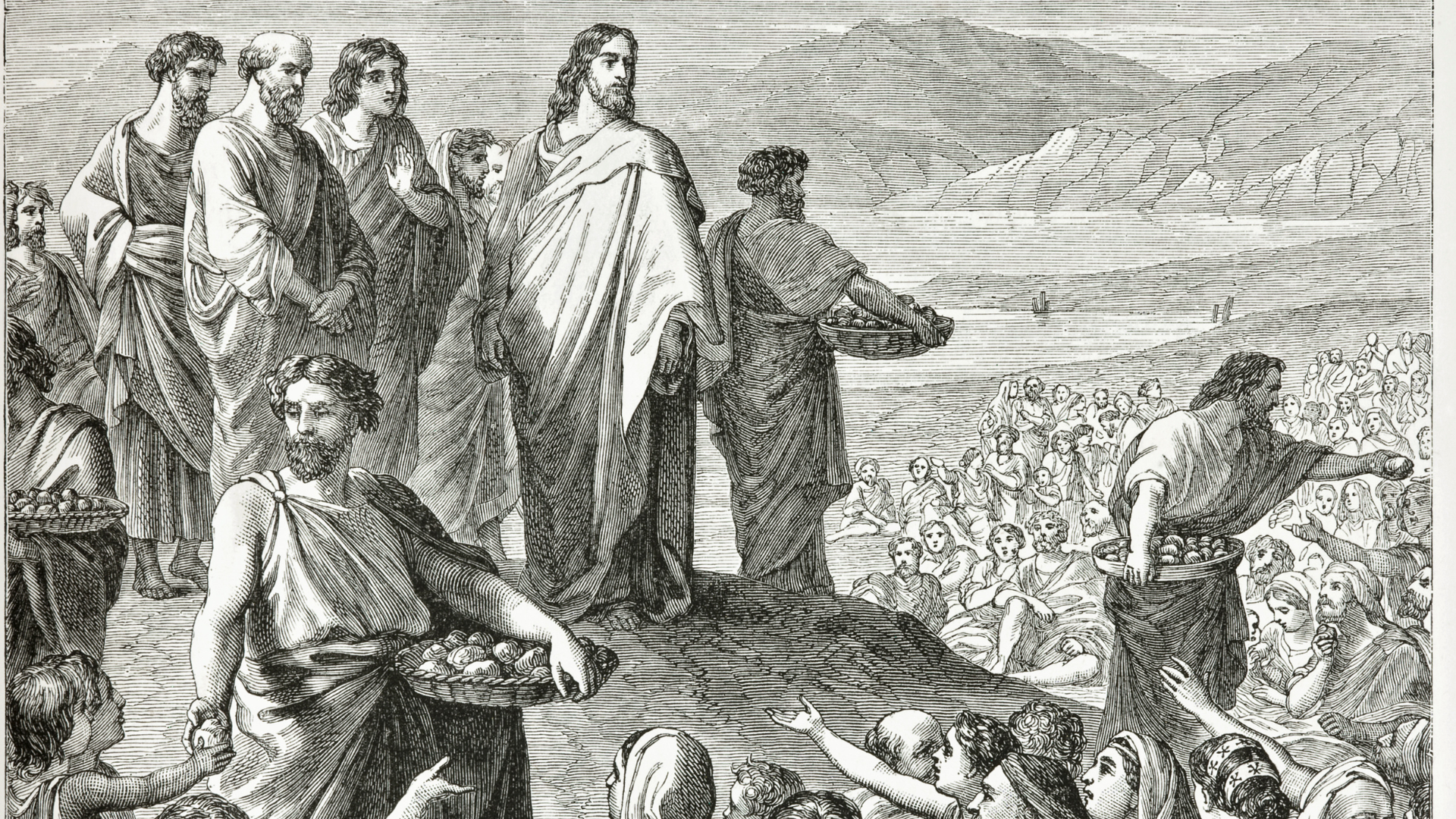
The Gospel of this Sunday brings us to the opening of the Sermon on the Mount — the great manifesto of the Kingdom of God. These Beatitudes are not a list of commands. Jesus does not say, “You must become poor, sad, persecuted.” He simply declares: Blessed are you. This is crucial. Jesus is not glorifying suffering for its own sake. He is revealing where God already stands. Each Beatitude follows a pattern: a lack, a wound, a deprivation is met with a promise. Poverty meets the Kingdom. Mourning meets consolation. Meekness meets inheritance. Hunger for justice meets fulfilment. And this pattern forces a choice upon us. Do we believe that reality is ultimately governed by power—or by promise?
“Blessed are the poor in spirit.” Not those who worship poverty, but those who refuse to absolutise wealth. As someone once said rather brilliantly: poverty of spirit is not about how much you have, but about how much you need. It is about freedom of heart.
“Blessed are those who mourn.” Not professional pessimists, but those who suffer real loss and injustice. Jesus promises that their tears are not wasted. That history is not indifferent to their pain.
“Blessed are the meek.” This one is particularly jarring. Meekness sounds like a recipe for being trampled. Yet Jesus says that the meek will inherit the earth. Why? Because the earth ultimately belongs not to the aggressive, but to those who refuse to make violence their language.
I sometimes think that our world desperately needs to hear this again. We live in an age of shouting, outrage and constant self-assertion. The Gospel quietly insists that the future belongs to those who do not need to win every argument.
The Beatitudes continue: mercy, purity of heart, peacemaking, persecution. Each one dismantles a modern myth. Mercy contradicts the myth that revenge restores balance. Purity of heart contradicts the myth that cynicism equals intelligence.
Peacemaking contradicts the myth that conflict is inevitable and redemptive.
And then comes the most scandalous line of all: “Blessed are you when people insult you, persecute you, and falsely say all kinds of evil against you because of me.” At this point, many sensible people quietly exit the room. And yet Jesus is deadly serious. He does not say: tolerate it, endure it, grit your teeth. He says: rejoice. Why? Because faith tells us that no injustice, no humiliation, no loss endured for the sake of truth will have the final word. This does not mean Christians should seek persecution or passively accept abuse. But it does mean that we do not betray Christ in order to secure comfort or approval.
And here I must speak personally. As a priest—and as a believer—I know how tempting it is to soften the Gospel, to make it more acceptable, less abrasive. But truth to be told, Christianity that never provokes is no longer Christianity. It is therapy with religious language.
What does all this mean in practice? It means that if God truly delights in the humble, then our instincts need conversion. We instinctively admire the confident, the articulate, the successful. But the Gospel trains us to notice the quiet faithful, the unnoticed carers, the morally stubborn. It means that when we face loss, misunderstanding or failure because we refuse to compromise our conscience, we have not failed. We have, in a very real sense, won. It also means that the Church must constantly examine whether it has absorbed too much of the world’s logic. Do we value efficiency more than fidelity? Influence more than truth? Numbers more than holiness? The Beatitudes do not offer a strategy for success. They offer a way of being human in a world that has forgotten what humanity looks like. And yes, they will make us look foolish at times. They will make us slower, less competitive, less impressive. But they will also make us free. In a culture obsessed with winning, Jesus dares to call the “doormats” blessed. And astonishingly, he is right. Because in the end, it is not those who pushed their way forward who inherit the Kingdom—but those who trusted that God was already ahead of them.
Fr. Dominik DOMAGALA