
Sunday Sermon: “Obedience is Freedom”
Readings:
- Genesis 2:7-9, 3:1-7
- Romans 5:12-19
- Matthew 4:1-11
Obedience. A rather unpleasant word, isn’t it? It conjures images of oppression, loss of independence, blind submission. Perhaps that is no accident. Long ago, in Eden, the devil succeeded in making obedience appear degrading, even dangerous. And he has been refining that distortion ever since. Yet obedience — to God, of course — is in fact the highest expression of freedom. If the word jars, replace it for a moment with another: faithfulness. The readings for the First Sunday of Lent, Year A, invite us to rediscover that what the world calls restriction, Scripture reveals as liberty. What the serpent called emancipation, Christ exposes as slavery. Lent begins, then, not with ashes alone, but with a question: whom do we trust?
Eden: Suspicion and the Loss of Trust (Genesis 2:7-9, 3:1-7)
The opening chapters of the Book of Genesis (2:7–9; 3:1–7) are not a scientific report. No one stood by with a camera at the dawn of creation. The sacred author tells a story — not because it is fictional in meaning, but because it conveys truths too deep for bare abstraction. These first eleven chapters of Genesis answer the perennial human questions: Why is there something rather than nothing? Why are we here? Why, in a good world, is there evil?
The narrative begins with generosity. “The Lord God formed man from the dust of the ground and breathed into his nostrils the breath of life.” The image is intimate. God is not a distant engineer but a craftsman who bends down, breathes life, plants a garden — Eden, a symbol of abundance and peace, especially to peoples accustomed to arid lands. Two trees stand at the centre: the tree of life and the tree of the knowledge of good and evil. Humanity, already lavishly gifted, is given freedom — real freedom. The possibility of eternal life. And the possibility of stepping outside trust. The serpent’s strategy is subtle. He does not begin with an outright denial. He begins with suspicion. “Did God really say…?” He exaggerates the prohibition, suggesting that God has forbidden everything. Eve corrects him, yet in doing so adds a detail — “nor shall you touch it” — subtly intensifying the restriction. The seed of doubt is planted.
The first lie is not about fruit. It is about God’s character. The serpent suggests that God is withholding something good. That obedience is deprivation. That autonomy is maturity. How contemporary that sounds.
The second step is more direct: “You will not die.” A flat contradiction of God’s word. Then comes the half-truth: “You will be like God.” Indeed — but not in the way imagined. To “know good and evil” is to experience evil. It is like telling a child that jumping from a second-floor window will make him wiser. It will. But at what cost? Sin, at its core, is disobedience born of mistrust. Eve takes. Adam receives. The rupture begins. Immediately they notice their nakedness — vulnerability becomes threat. Trust between them fractures. Soon they will hide from God, accuse one another, experience toil, domination, suffering, death.
Once tasted, sin cannot simply be erased from memory. Its mark enters human history. This is what we call original sin — not merely an ancient event, but a wounded condition. And here lies a crucial insight: sin is not freedom. It is bondage — bondage to self-assertion, to fear, to the endless pursuit of self-justification. God’s long strategy in salvation history is the patient restoration of trust. Abraham, Jacob, Moses, David — flawed, often stumbling — yet marked by one decisive trait: they believed God. Imperfectly, yes, but genuinely. The first to trust perfectly, even unto death, will be the Son.
The New Adam: Obedience unto Life (Romans 5:12-19)
In Romans 5:12–19, St Paul offers a theological meditation on Genesis. “Through one man sin entered the world, and death through sin… so death spread to all.” Adam, he says, is a type — a foreshadowing — of the one who was to come. Christ is the New Adam. As Adam’s disobedience wounded human nature, Christ’s obedience restores it. Notice carefully: Paul does not say we are saved merely by Christ’s suffering. We are saved by His obedience — obedience that cost Him suffering, obedience rooted in absolute trust in the Father. The serpent promised expansion. Sin narrowed the human horizon. Cherubim guarded the tree of life. Christ reopens the way. And more: Paul insists that grace abounds beyond the damage. Redemption is not a mere return to Eden. It is elevation. The believer does not become simply a restored creature, but an adopted child. Heaven is not a repaired garden; it is participation in divine life. One trespass brought condemnation. One act of righteousness — one act of faithful obedience — brings justification for all. Obedience, then, is not humiliation. It is participation in the Son’s trust.
The Desert: The Test of Freedom (Matthew 4:1-11)
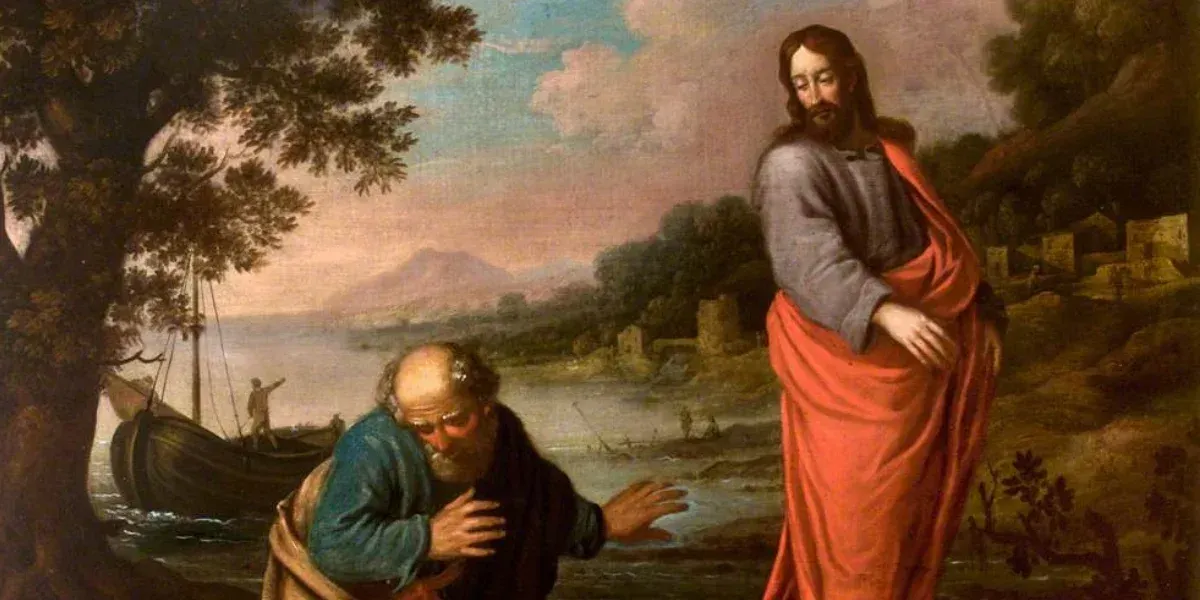
The Gospel of Matthew (4:1–11) presents Jesus in the wilderness, forty days after His baptism in the Jordan. The desert in Scripture is always a place of testing — Israel’s wandering, Elijah’s journey to Horeb. Now the Messiah stands where humanity first failed. The temptations mirror Eden.
First: stones into bread. Hunger is real. But Jesus refuses to define Himself by material need. “Man shall not live by bread alone.” Material goods matter — but they are not ultimate. When material security becomes absolute, Mammon dethrones God. How often we justify moral compromise with economic necessity. “I must provide.” Indeed — but not at the cost of truth.
Second: throw Yourself down. If You trust God, prove it. The temptation is spiritual pride disguised as faith. Jesus refuses to test the Father. Trust does not manipulate. How subtle this temptation can be. “Lord, You deal with it,” we say — when perhaps we are meant to act. Trust is not passivity. It is fidelity in action.
Third: all the kingdoms of the world — for one act of worship. Power through compromise. Influence through alliance with darkness. The answer is decisive: “You shall worship the Lord your God, and Him only shall you serve.” The end does not justify the means. Even noble causes cannot be pursued through ignoble methods. After His refusal, angels minister to Him. Rabbinic tradition imagined that Adam once enjoyed angelic service in Eden. Here, in resisting temptation, Jesus tastes the restored paradise. But the decisive point is this: at every step, Jesus answers with Scripture. Not with His own authority, though He could have. He stands under the Word. He trusts the Father’s voice. This is obedience as freedom.
Lent and Our Own Desert
What does this mean for us? First, we must reject the serpent’s method. Sowing suspicion about others’ integrity, hinting without knowing, manipulating partial truths — these are diabolical tactics. Once suspicion is planted, it grows. It corrodes communities, families, parishes. If we do not know, we must not suggest. The Eighth Commandment is not optional. Second, we must beware the absolutising of material concerns. Financial prudence is good. But when money becomes the measure of success, when spiritual aims are subordinated to economic security, something has shifted. Means become ends. I often think of Mother Teresa of Calcutta. She wanted to accompany the dying poor — not primarily to construct institutions. The world criticised her for not building more facilities. But the deepest poverty is loneliness. Even the finest hospital can treat a person coldly. Faithfulness is not efficiency. Third, trust God — but do not test Him. Pray, “Thy will be done.” But if you can feed the hungry, visit the sick, welcome the stranger, then act. Christ’s hands were nailed to the Cross; He now works through ours. And finally: never bow to evil, however attractive the outcome. A pious project achieved through dishonesty is not for God’s glory. Fidelity to the Gospel outweighs visible success.
The world tells us that obedience diminishes. Scripture reveals that mistrust enslaves. In Eden, suspicion shattered communion. In the desert, trust restored it. True freedom is not the ability to choose anything whatsoever. It is the capacity to choose the good — steadily, faithfully, joyfully. Lent is a return to the desert — not to prove ourselves, but to rediscover whom we trust. Christ has walked there before us. He has answered for us. He has reopened the way to the tree of life. Obedience — faithfulness — is not a chain. It is the path home.
Fr Dominik DOMAGALA