Mass Readings:
- Deuteronomy 8:2-3, 14-16
- 1 Corinthians 10:16-17
- John 6:51-58
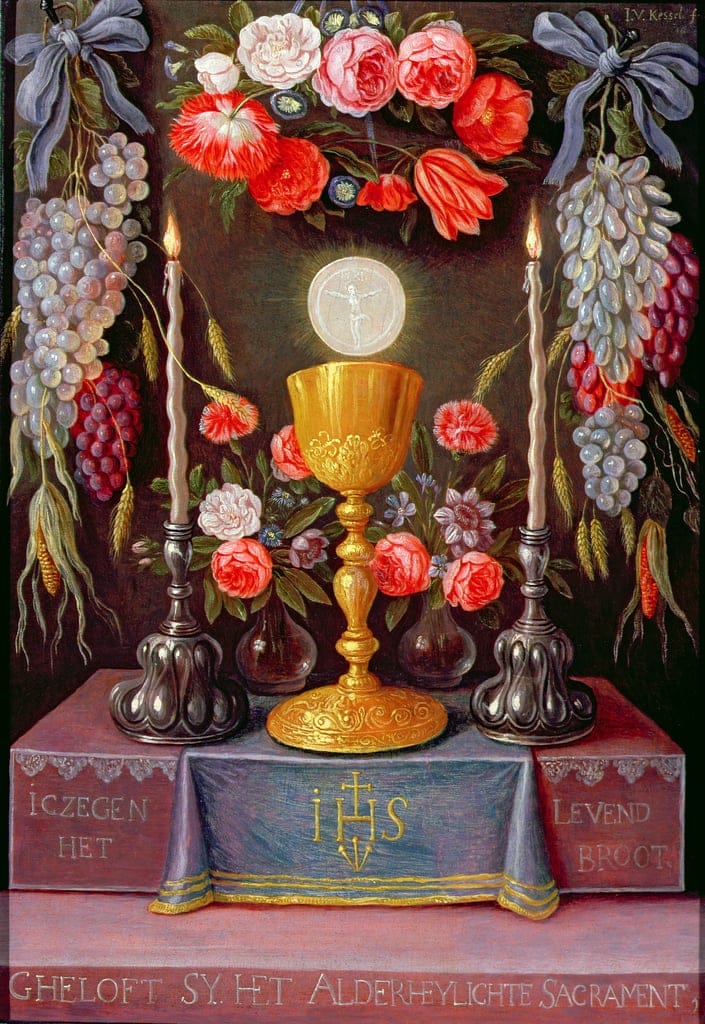
There are truths in Christianity so familiar that we risk no longer being astonished by them. The feast of Corpus Christi confronts us with one of them. We hear again words that Catholics have repeated for centuries: “This is my Body… This is my Blood.” Yet if we truly allowed those words to enter our hearts, they would unsettle us far more than they usually do. For what the Church proclaims today is not a symbol alone, nor a poetic remembrance of a dead Teacher. Christianity dares to say something infinitely greater and far more demanding: that God feeds His people with Himself. The Lord gives not merely instruction, inspiration, or moral guidance, but His own Body and Blood as food for the journey to eternal life. In our modern western reality, increasingly secular and hesitant about public expressions of faith, Corpus Christi can appear strangely out of place. Eucharistic processions through streets and villages may seem to some like remnants of another age—beautiful perhaps, but no longer relevant. Yet perhaps this feast is more necessary now than ever. Because the modern world is not suffering from a lack of information. It is suffering from hunger. Spiritual hunger. Moral hunger. The quiet exhaustion of souls trying to live without God. And into that hunger Christ speaks again: “I am the living bread which came down from heaven.”
God Who Feeds His People (Deuteronomy 8:2-3, 14-16)
The First Reading from Deuteronomy takes us back into the wilderness. Israel has spent forty years wandering through the desert after the Exodus from Egypt. Moses stands before the people on the threshold of the Promised Land and asks them to remember. That is the key word of the passage: remember. The desert was not simply wasted time. It was a school of dependence. Israel learned there that survival did not come from human strength alone. Again and again, when food failed and hope disappeared, God provided manna from heaven—bread where there should have been none. But Moses warns the people of something more dangerous than hunger: forgetfulness. He tells them: “Do not say in your heart: my own power and the strength of my own hands have gained me this wealth.”
How modern those words sound. Contemporary society constantly tempts us to believe that we are self-sufficient. Success becomes our achievement. Comfort becomes our entitlement. Technology gives the illusion of mastery over life itself. And yet the human heart remains restless, fragile, fearful of suffering and death. The tragedy of secular culture is not that it rejects religion intellectually. More often, it simply forgets God practically. Moses understands this danger well. Once Israel enters the land flowing with milk and honey, they may begin to believe they no longer need God who led them through the desert. Prosperity can produce spiritual amnesia. The same danger exists for Christians today. We can become so absorbed by work, schedules, anxieties, and comforts that God gradually becomes peripheral. Sunday Mass becomes optional. Prayer becomes irregular. The Eucharist becomes something admired from a distance rather than received with longing. And yet the desert has not disappeared. Human life itself remains a pilgrimage. Beneath the appearance of modern prosperity there is still loneliness, confusion, addiction, family breakdown, anxiety, and despair. The human soul still hungers. And the Eucharist remains the manna for pilgrims on the road to the true Promised Land.
More Than a Symbol (John 6:51-58)
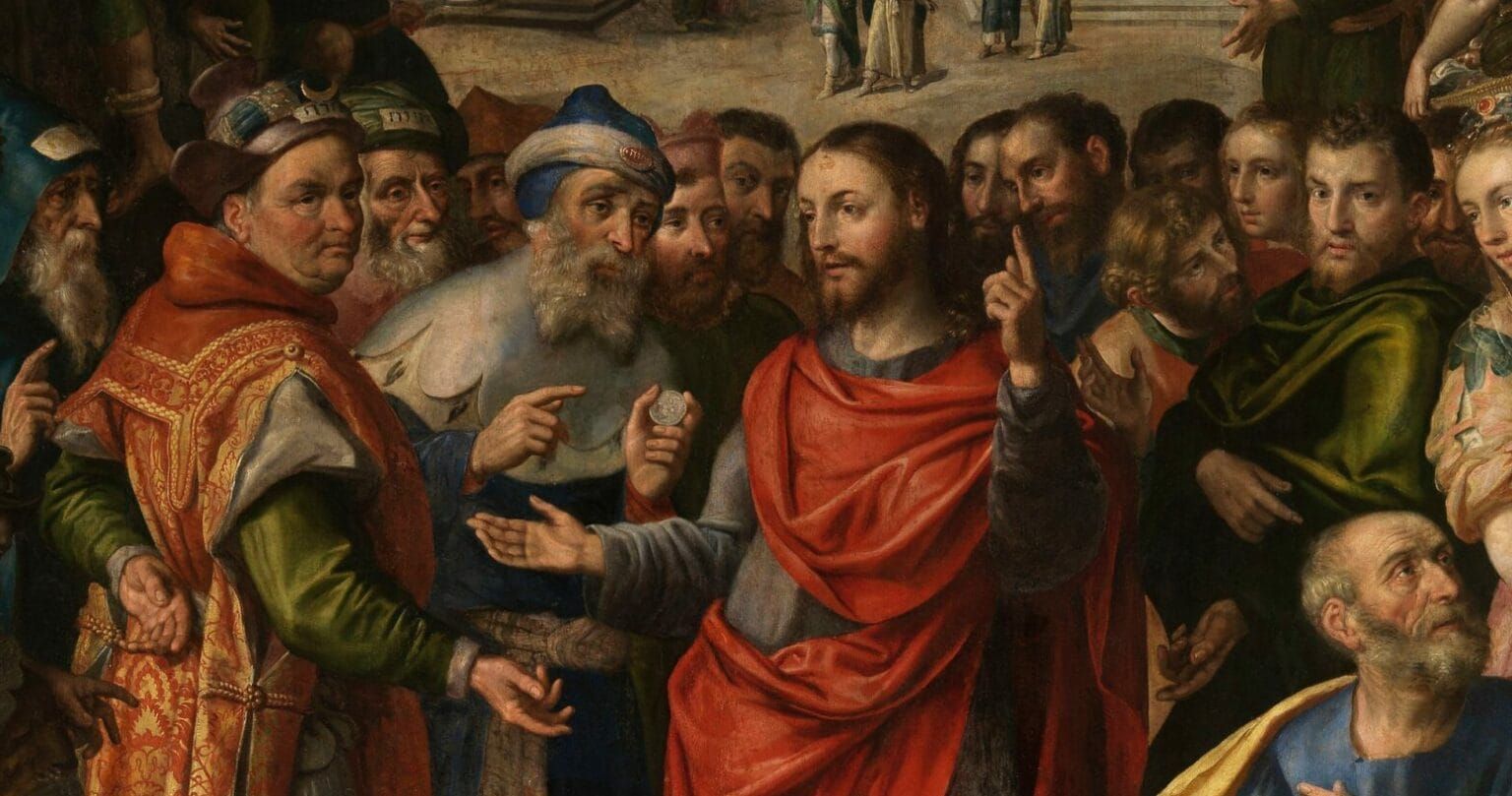
The Gospel today comes from the sixth chapter of Saint John—the great Eucharistic discourse. It begins after the multiplication of the loaves, when the crowds seek Jesus because He fed them miraculously. But Christ gradually leads them beyond earthly bread toward something far greater. At first, His words sound metaphorical: “Whoever believes in me shall never hunger.” Yes, faith itself is nourishment. To trust Christ is already to receive life from Him. But then the language becomes startlingly concrete: “The bread that I shall give is my flesh for the life of the world.” The reaction of the listeners tells us immediately that they understood Him literally. They are disturbed. Shocked. Some eventually walk away because the teaching is too difficult to accept. Had Jesus intended only a symbol, this would have been the perfect moment to clarify the misunderstanding. Instead, He intensifies His words. Again and again He insists that His followers must eat His flesh and drink His blood. The Church has therefore always understood the Eucharist not merely as symbolic remembrance, but as real presence. Christ gives Himself entirely. As Pope Benedict XVI once wrote, the Eucharist is already the anticipation of Calvary: at the Last Supper Christ freely offers the sacrifice that will be completed on the Cross.
This is why Catholics kneel before the Blessed Sacrament. This is why silence in church matters. This is why showing our respect towards tabernacles matter. This is why Eucharistic adoration matters. Because if the Eucharist is truly Christ Himself, then every church contains a mystery greater than anything the world can offer. And yet the Gospel also warns us against misunderstanding the Eucharist in another direction. Holy Communion is not magic. It is not a religious ritual that works automatically regardless of faith or conversion. To receive the Body of Christ while refusing Christ in daily life is a contradiction. Communion has meaning only within faith—within the sincere desire to belong to Him.
One Bread, One Body (1 Corinthians 10:16-17)
Saint Paul in the Second Reading adds another dimension to the Eucharist: unity. “Because there is one bread, we who are many are one body.” The Eucharist unites us not only with Christ but also with one another. Every Mass reminds us that Christianity is never purely individualistic. We approach one altar, receive one Bread, and become one Body. This truth is deeply challenging in a fragmented society. Modern life isolates people. Many live physically close to one another yet remain strangers. Even within families there can be silence, resentment, division. The Eucharist calls Christians to something radically different. We cannot receive the Body of Christ while nurturing hatred, contempt, or indifference toward others. The altar becomes a school of reconciliation.
At the same time, Paul writes these words while warning the Corinthians against idolatry. One cannot belong simultaneously to the table of Christ and to false gods. Those false gods today rarely take the form of pagan statues. They are subtler: money, career, ideology, pleasure, public approval, endless self-preoccupation. Modern society often encourages people to construct identity without reference to God. But the human heart inevitably worships something. The Eucharist therefore becomes not only nourishment but also a public declaration of allegiance. To receive Communion is to say: Christ is the Lord—not the passing idols of this age.
Perhaps this is why Corpus Christi processions remain so important. Historically, these processions developed during the Middle Ages as public acts of faith in the real presence of Christ. Over time, especially after the Reformation, they became explicit confessions of Catholic belief: Christ walks among His people. There is something profoundly moving about carrying the Blessed Sacrament through ordinary streets. Christ passes houses, shops, schools, cafés, places of noise and distraction. For one brief moment, the normal rhythm of the world is interrupted by eternity. In increasingly secular Ireland, such witness requires quiet courage. Public expressions of Catholic faith are no longer culturally expected. Many believers feel pressure to keep religion private, discreet, invisible. Yet Christianity has never been purely private. The first Christians astonished the pagan world not because they hid their faith, but because they lived it visibly and publicly. They prayed openly, cared for the poor, forgave enemies, and accepted ridicule rather than deny Christ.
A Eucharistic procession is therefore not triumphalism. It is witness. It says gently but firmly: Christ is still here. Not as memory alone, but as living presence. And perhaps our modern Ireland needs precisely this calm confidence—not angry defensiveness, not nostalgia for the past, but believers who quietly and joyfully live from the Eucharist. There was once a tendency in Catholic life to treat Holy Communion almost as a reward for spiritual perfection. People received rarely, fearful of unworthiness. The Church today rightly emphasises something different. Bread is daily food. Christ gives Himself not because we are already strong, but because we are weak. Saint Ambrose beautifully contrasted the manna of the desert with the Eucharist. The manna sustained Israel temporarily, yet those who ate it still died. But the Bread of Christ gives eternal life because it is the Body of the Lord Himself. The Eucharist is therefore medicine for the soul. Strength for tired believers. Hope for sinners trying to begin again. Food for pilgrims who often walk through deserts of confusion and discouragement. Without this Bread, Christian life gradually weakens. Faith becomes abstract. Prayer becomes dry. Morality becomes mere effort. But where the Eucharist is loved, something changes. Not always dramatically or emotionally, but deeply and steadily. Christ slowly shapes the soul from within.
At the heart of Corpus Christi stands a simple but overwhelming truth: God has chosen to remain with His people. Not symbolically alone. Not merely through memory or ideas. But sacramentally, really, enduringly. In every tabernacle, in every Holy Mass celebrated quietly in village churches or crowded city parishes, Christ continues to feed His people with the Bread of Heaven. And perhaps this is the final challenge of today’s feast. Not simply whether we intellectually believe in the Eucharist, but whether we truly live as people nourished by it. For if Christ truly gives us His Body and Blood, then casual Christianity is no longer enough. We cannot receive heavenly Bread and live entirely for earthly things. We cannot kneel before the altar and then belong completely to the spirit of the age. The Eucharist asks for faith. But it also creates faith.
And so, on this feast of Corpus Christi, the Church has to once again carry Christ into our streets—not because the world already believes, but because the world still hungers.
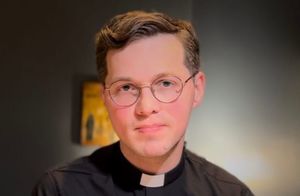
Fr Dominik Domagala
POINTS FOR FURTHER MEDITATION:
- First Reading (Deuteronomy 8:2-3, 14-16):
“He fed you with manna… to teach you that man does not live on bread alone.”
- Recall the moments in your life when God led you through a “desert” — times of uncertainty, weakness, or dependence.
- Ask yourself: have difficulties brought you closer to God, or made you rely more on yourself?
- The manna was daily bread given from heaven. Do I recognise the Eucharist as God’s nourishment for my journey?
- What “false securities” tempt me to forget God when life becomes comfortable?
- Do I trust that God can feed my soul even when I feel spiritually empty?
- Second Reading (1 Corinthians 10:16-17):
“Though we are many, we are one body.”
- Saint Paul reminds us that the Eucharist is not only personal communion with Christ, but communion with one another.
- Is my participation in the Holy Mass shaping the way I treat other people?
- Are there divisions, resentments, or judgments in my heart that contradict the unity of the Body of Christ?
- How can I become more aware that every participation in the Holy Mass unites me not only with Christ, but with the whole Church?
- Gospel (John 6:51-58):
“I am the living bread that came down from heaven.”
- Jesus does not offer merely an idea or a symbol — He offers Himself. Do I truly believe in the Real Presence of Christ in the Eucharist?
- How often do I receive Holy Communion with routine rather than wonder?
- Christ desires to remain in me: “Whoever eats my flesh and drinks my blood remains in me.” What prevents me from living in deeper union with Him?
- The Eucharist is food for eternal life. Do I live with eternity in mind, or only for temporary concerns?
- After receiving Christ at Mass, do I carry His presence into my daily life, relationships, and decisions?