Mass Readings:
- Isaiah 22:19-23
- Romans 11:33-36
- Matthew 16:13-20
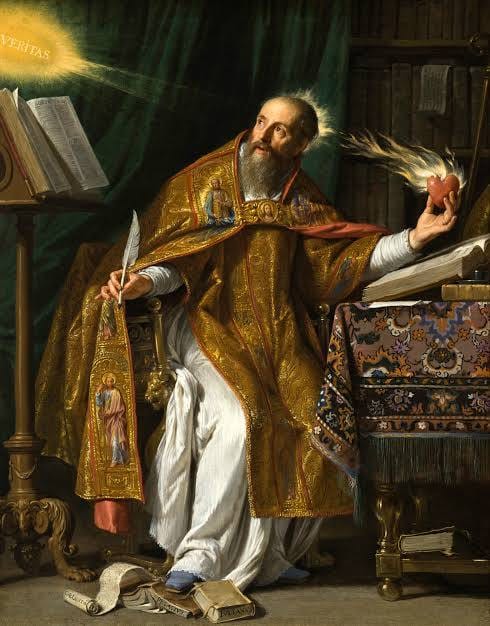
There is something deeply moving in the story of St Monica. For years she prayed for her son Augustine, watching him move further and further from the faith she had so carefully handed on to him. She could not persuade him, command him or somehow arrange his conversion. Augustine had to make his own journey, and Monica had to learn the difficult art of entrusting to God what she could not accomplish herself. At one point she sought the advice of St Ambrose of Milan. She poured out before him the anguish of a mother who had prayed for so long and seemed to have received so little in return. Ambrose encouraged her to persevere. God, he understood, was already at work in Augustine in ways that Monica could not yet see.
It is a useful place from which to approach this Sunday's readings. For beneath their apparently different subjects—an obscure official in the court of Judah, St Paul's meditation on the inscrutability of God, and Peter's confession of faith at Caesarea Philippi—there runs a single theme: the temptation of human beings to imagine that they are more important, more powerful and more in control than they really are. Perhaps the simplest way of putting it would be: we must learn not to inflate ourselves. We must remember who is God—and who we are.
Danger of an Important Position (Isaiah 22:19-23)
The first reading introduces us to Shebna, an official at the court of King Hezekiah. He occupied an influential position, apparently with considerable prestige and access to power. Isaiah's prophecy suggests that he had become rather too conscious of his own importance. He had prepared an elaborate tomb for himself, as though he were determined to make his status permanent. Yet God announces that he will be removed from office and that another man, Eliakim, will take his place. The symbolism is unmistakable. The robe, the sash and the key of authority can be given and taken away. The man who imagines himself indispensable discovers that he is not.
There is something perennial about the story. We are naturally inclined to interpret the positions we occupy as evidence of our own worth. We tell ourselves that we have been entrusted with responsibility because we are particularly capable, particularly deserving, perhaps even indispensable. Sometimes that is partly true: competence, character, and preparation matter. Yet there are usually many people who could have occupied the same position. Why this person rather than another? The Christian answer is not necessarily that God has singled this person out as morally superior. It is that providence has permitted this particular responsibility to fall into these particular hands. And permission is not the same thing as approval. The fact that a person possesses authority does not mean that everything he does with it is approved by God. The biblical view of authority is therefore more sober than our usual political or social language. Authority is entrusted, and therefore it is ultimately accountable.
Mystery of God Who Does Not Need Us (Romans 11:33-36)
This is precisely where the second reading takes us. St Paul, after wrestling with the mysterious ways in which God has worked through Israel and the Gentiles, reaches the limits of human comprehension and breaks into something resembling a hymn: “How rich are the depths of God—how deep his wisdom and knowledge! And how impossible it is to penetrate his motives or understand his methods!” Paul does not pretend that he has solved every mystery. He has thought deeply, argued carefully and developed one of the most sophisticated theological reflections in the New Testament, yet he ends not with intellectual triumph but with worship.
There is something profoundly Christian in that movement from understanding to wonder. We are capable of knowing much about God, but we can never place God within the limits of our own understanding. His purposes are not simply a larger version of our purposes. His wisdom is not merely a more extensive form of our wisdom. And Paul gives the reason: “All that exists comes from him: all is by him and for him.” Those words strike at one of the deepest illusions of modern humanity. We are accustomed to imagining ourselves as the measure of reality. We speak, rightly, of human dignity, freedom and responsibility. Yet we can easily slide from the conviction that the human person possesses extraordinary dignity into the much less defensible assumption that the human person is somehow the owner of existence. We are not. We are creatures. The world was not created by us, nor does it exist for our glorification. If there is something remarkable about us, it is not that we possess greatness independently of God, but that God who is infinitely greater than us has chosen to love us. That is why Christian humility should never be confused with self-contempt. To be humble is not to say, “I am worthless.” It is to say, “I know what I am, and I know from whom I have received everything.” Perhaps this is why the final words of Paul's hymn are so important: “To him be glory for ever. Amen.” The glory belongs to God.
Peter Receives the Keys (Matthew 16:13-20)
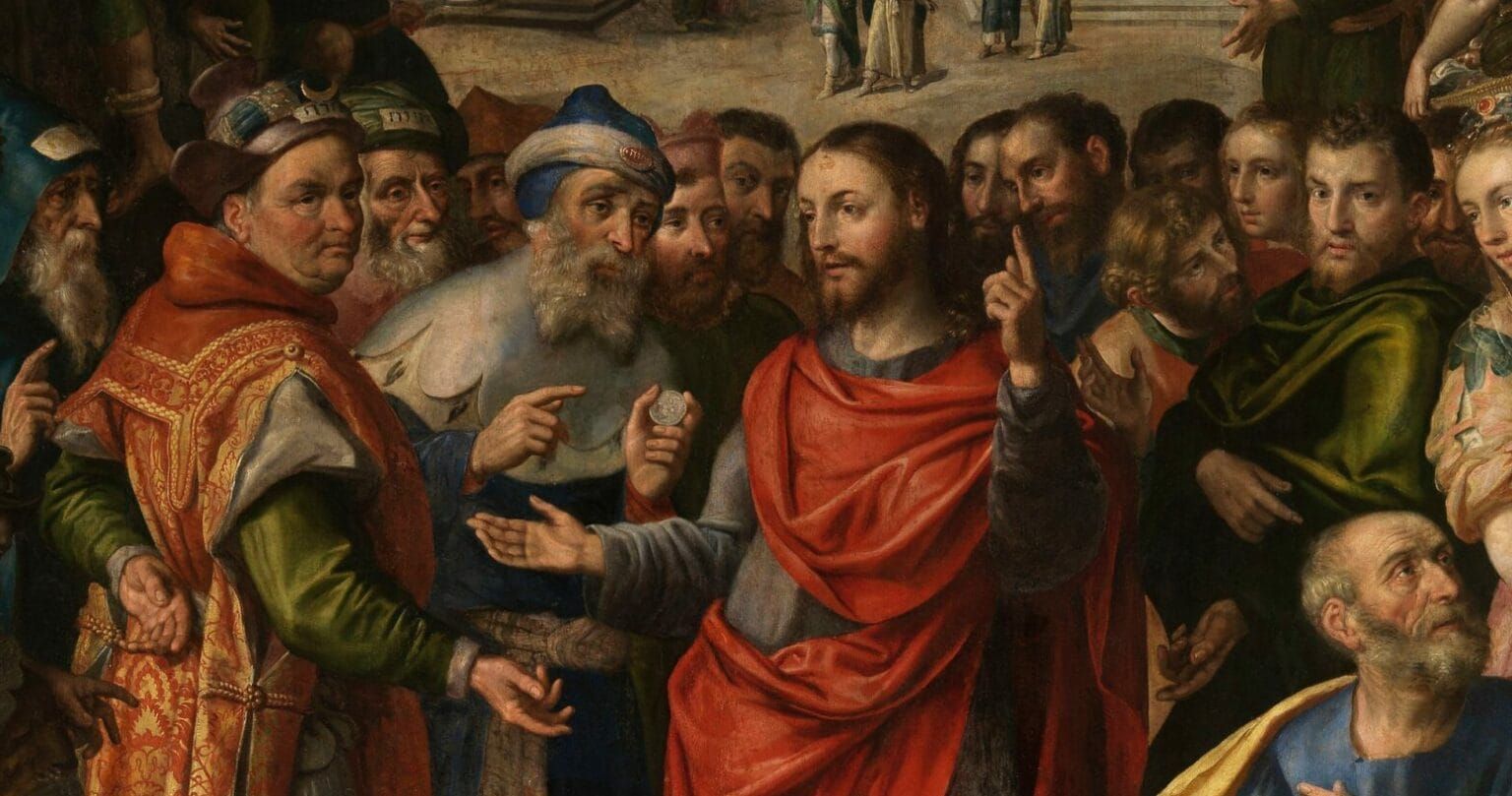
The Gospel then brings the question of authority into sharper focus. At Caesarea Philippi, Jesus asks His disciples who people believe Him to be. The answers are varied: John the Baptist, Elijah, Jeremiah or one of the prophets. Then Jesus turns the question upon them: “But you—who do you say I am?” Peter gives the answer which will define the Christian faith: “You are the Christ, the Son of the living God.” Jesus declares that Peter has not arrived at this knowledge merely by human deduction. It has been revealed to him by the Father. And then, astonishingly, He entrusts Peter with the keys of the Kingdom. The language deliberately recalls the first reading: the key, the authority to open and close, the power to bind and loose. Yet there is a crucial distinction. Peter receives the keys; he does not own them.
That is the nature of Christian authority. The Pope, bishops, priests, parents, teachers and all those entrusted with responsibility in the Church exercise authority that is fundamentally a form of stewardship. The authority remains Christ's. It is entrusted to human hands for the good of His people. This makes authority at once more serious and more humble. The person who exercises it cannot simply say, “I am in charge, therefore I am right.” Nor may he invoke God's authority to sanctify his own ambitions, prejudices or mistakes. To misuse divine authority in order to justify one's own interests is itself a profound abuse of God's name. Peter, of course, would eventually learn this lesson through humiliation. The man who receives the keys will soon discover his own weakness when he denies his Master. His election is therefore not a prize for having proved himself superior to everyone else. It is a summons to become the man capable of carrying what has been entrusted to him.
The Church Is Not Ours to Save
There is another extraordinary promise in the Gospel that deserves our attention, especially at a time when many Catholics are anxious about the future of the Church: “The powers of hell shall never conquer it.” Christ does not promise that every Christian institution will flourish. He does not promise that every church will remain full, that Christianity will always enjoy cultural prestige, or that every generation will be more receptive to the Gospel than the last. He promises that His Church will endure. This distinction matters. We can become so preoccupied with preserving institutions that we forget that the Church does not belong to us. Nor is its future secured by our ingenuity. Evangelisation remains our duty, certainly; but the Church will not be saved by clever campaigns, attractive programmes or desperate attempts to manufacture enthusiasm. She will endure because Christ has promised that she will endure. Perhaps what is required of us is something simpler and more demanding: to live faithfully as Christians here and now. A credible Christian life remains one of the most persuasive forms of evangelisation.
And here Monica and Augustine return to us. Monica could not control the course of her son's life. She could only pray, wait and trust. She did not know what God was doing in Augustine, but God was doing something. This is one of the most consoling aspects of divine providence. God does not normally give us a preview of His plans. He asks us to be faithful in the present while leaving the future in His hands. Monica wanted Augustine to become a Christian, but she could not make him one. She could pray for him, love him, speak to him and entrust him to God. The rest belonged to grace. There is a lesson here not only for parents, but for anyone who has ever tried to control another person's life: a spouse praying for a wayward husband or wife, a parent worrying about an adult child, a priest concerned about a parishioner, a friend watching someone make destructive choices. Sometimes faithfulness means doing what we can—and then recognising that God is God and we are not. Monica eventually saw what she had prayed for. But she had to learn to trust God before she could see the answer.
Augustine's conversion was not simply the discovery of a new philosophy. He discovered Christ. That is why his story connects so beautifully with today's Gospel. Jesus' question to Peter—“Who do you say that I am?”—is ultimately addressed to every Christian. It is possible to know many things about Jesus without actually knowing Him. We can call Him a teacher, a moral reformer, a religious genius or a great historical figure. All of those descriptions contain something true, but none reaches the heart of the Christian confession. Peter says: “You are the Christ, the Son of the living God.” Augustine eventually discovered that this confession could not remain merely an intellectual proposition. If Christ really is the Lord, then my life belongs to Him. And once that confession becomes our own, everything else falls into its proper place. Our authority becomes stewardship. Our achievements become gifts. Our failures become occasions for humility. Our anxieties about the future become opportunities for trust. And our very existence becomes what Paul says it has always been: something that comes from God, through God and ultimately for God. Monica had to learn that she was not the saviour of her son. Peter had to learn that receiving the keys did not make him the master of the Church. Augustine had to discover that possessing an extraordinary intellect was not enough to satisfy the human heart. Perhaps we need to learn the same lesson. We are not God. We are not indispensable. The world does not depend upon our importance. And that is not bad news. It is freedom. For when we cease trying to be what we were never created to be, we become capable of receiving with gratitude what God has actually given us: the dignity of being His creatures, the grace of belonging to His Church, and the astonishing privilege of knowing and loving the One whom Peter confessed as “the Christ, the Son of the living God.”
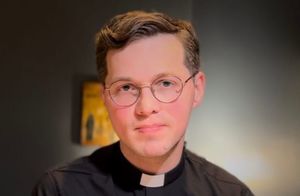
Fr. Dominik Domagala acquired a Master's in History of Liturgy and obtained a Licentiate in Sacred Scripture at St Patrick’s College in Maynooth. His main interests concern the OT and Books of Maccabees. He is the author of “The Social Sermon” blog on Facebook, Instagram and YouTube. Check out more at the website: thesocialsermon.com