
Mass Readings:
- Ezekiel 18:25-28
- Philippians 2:1-11
- Matthew 21:28-32
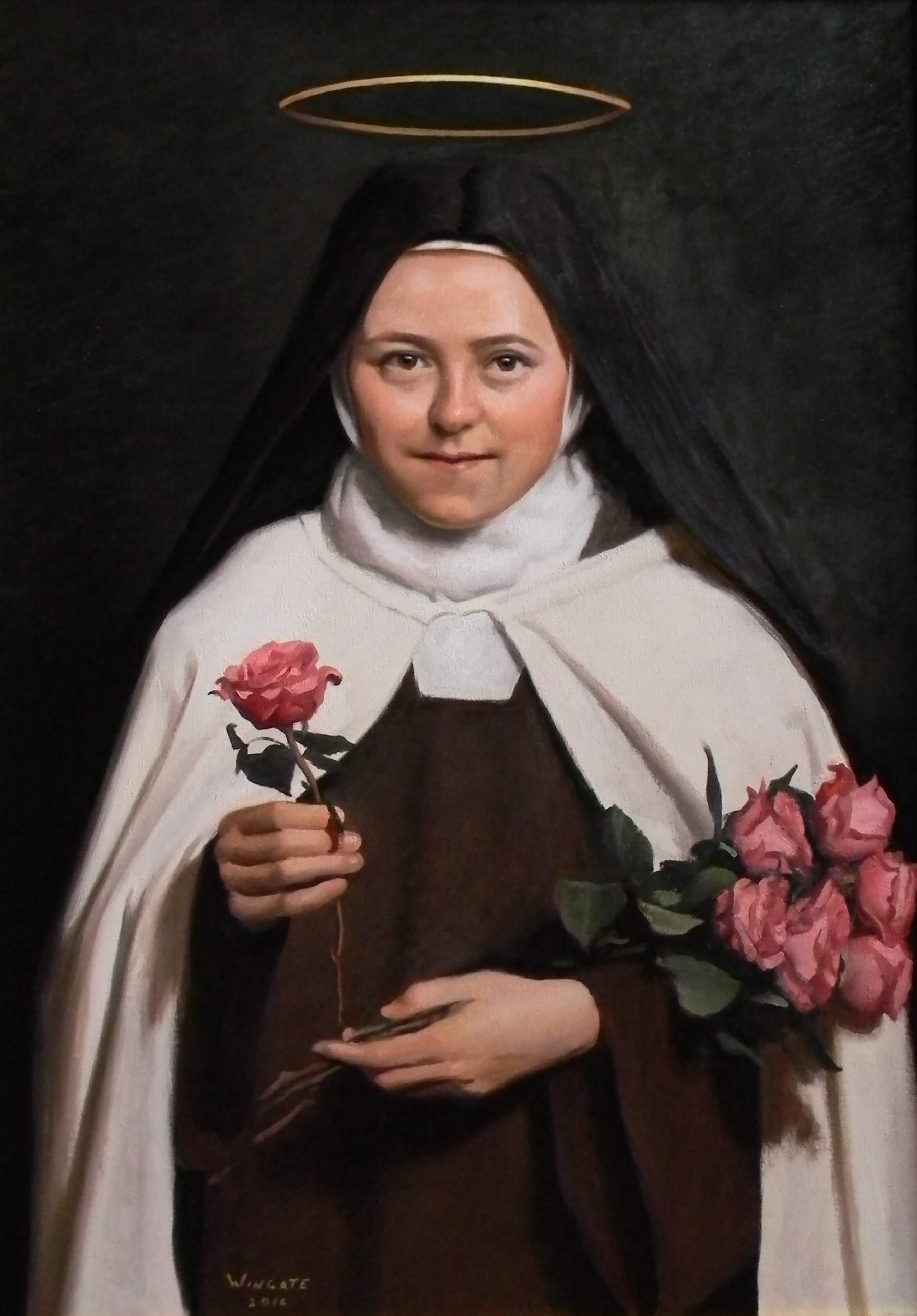
There is a small incident in the life of St Thérèse of the Child Jesus which, precisely because it is so ordinary, reveals something essential about the nature of Christian holiness. During her years in the Carmelite convent at Lisieux, Thérèse found herself particularly irritated by one of the older sisters, whose mannerisms and little habits had become a persistent source of annoyance. There was nothing dramatic about the situation and, indeed, nothing which would have attracted the attention of anybody outside the convent; nevertheless, Thérèse recognised that her response to this apparently insignificant irritation could either become an occasion for resentment or an opportunity for love. She therefore deliberately chose to treat the sister with particular kindness, concealing the effort which this required and accepting the fact that her small acts of charity would probably never be noticed. That hidden struggle is an illuminating introduction to this Sunday's readings, because the Gospel presents us with two sons whose relationship with their father is judged not according to the words they utter but according to what they eventually do. The first says “no” and then goes; the second says “yes” and remains where he is. The difference between them is therefore not a matter of vocabulary but of conversion. The Gospel asks a question which is considerably more searching than whether we know how to say the right things: what happens when the will of God encounters the ordinary circumstances of our lives?
Danger of putting people into categories (Ezekiel 18:25-28)
Human beings have an extraordinary capacity for classification. We distinguish between the respectable and the disreputable, the reliable and the unreliable, the good and the bad, and, although such distinctions may sometimes be necessary when we are judging particular actions, they become spiritually dangerous when we begin to treat them as permanent descriptions of persons. Ezekiel confronts precisely this tendency in the first reading. Speaking during the Babylonian exile, when Israel was being forced to reconsider many of its assumptions about its relationship with God, the prophet challenges the belief that a person's moral destiny can simply be inherited from those who came before him. The proverb circulating among the Israelites — “The fathers have eaten unripe grapes, and the children's teeth are set on edge” — expressed the conviction that the consequences of the past inevitably determined the present. Ezekiel refuses such fatalism. “The person who sins shall die,” he declares; the son is not automatically condemned because of his father's sin, just as the father does not acquire righteousness merely because his son happens to be virtuous. The theological principle beneath the argument is of considerable importance: before God, a human being is never merely the prisoner of somebody else's history. Our actions certainly have consequences, and sin can wound families and communities for generations, but God's judgement ultimately concerns the person who stands before Him. More importantly still, that person remains capable of conversion. The wicked man who turns away from wickedness can live; the righteous man who turns towards evil cannot simply rely upon the reputation which he acquired yesterday. God knows the whole of our history, but He does not allow our history to become an excuse for refusing the possibility of grace.
This is where the ancient argument of Ezekiel becomes remarkably contemporary. Once somebody has acquired a reputation for dishonesty, laziness, instability or bad behaviour, almost everything that person subsequently does tends to be interpreted through the lens of that reputation; genuine improvement is regarded with suspicion, while every mistake is treated as confirmation that nothing has really changed. The opposite injustice can be just as serious. A person who has acquired a reputation for being respectable, religious or successful may receive an extraordinary amount of moral credit, so that actions which would be condemned in somebody else are explained away as unfortunate exceptions, understandable weaknesses or merely temporary lapses. The prophet's message is uncompromising because God's judgement does not operate according to the prejudices of human society. He does not continue condemning the repentant sinner simply because others remember what he once was, nor does He overlook present sin merely because somebody has previously acquired an honourable reputation. Such a vision should make us both more hopeful about others and more humble about ourselves. Nobody is imprisoned permanently within his worst moment, but neither is anyone entitled to imagine that yesterday's virtue automatically excuses today's sin.
When saying yes becomes an empty gesture (Matthew 21:28-32)
Jesus develops this argument in the Gospel through the deceptively simple story of the two sons. Their father gives both of them the same instruction: “Go and work in the vineyard today.” One refuses, but subsequently changes his mind and goes; the other answers respectfully, “Certainly, sir,” but never sets foot in the vineyard. The point is not that disobedience is admirable, nor that the initial “no” somehow ceases to matter. Jesus is drawing attention instead to the difference between religious language and actual obedience. The immediate context makes His meaning unmistakable. He is addressing the chief priests and elders, the religious authorities who have questioned His authority, and He reminds them that the tax collectors and prostitutes — precisely those whom respectable society had placed among the irredeemable — believed the preaching of John the Baptist and changed their lives, whereas those who possessed religious status remained unwilling to repent. The irony is devastating: those who appeared to be saying “yes” to God were, through their refusal to change, effectively saying “no”; those whose lives had previously been marked by an obvious “no” were capable of hearing God's call and responding to it. The question consequently reaches well beyond the original controversy in Jerusalem: what is the value of saying yes to God with our lips if our lives persistently answer no?
There is a particular danger here for those who take their faith seriously, because religious observance can gradually become detached from the conversion it is meant to produce. One can attend Mass faithfully, pray the Rosary, observe devotional practices, know the commandments and defend the teachings of the Church, while simultaneously becoming impatient, proud, resentful or dismissive towards the people with whom one actually lives. The problem is not the Mass, the Rosary, devotion or obedience to the commandments; these are gifts of the Catholic life, not obstacles to it. The problem arises when religious practice becomes a substitute for conversion rather than an instrument of it. It is entirely possible to become meticulous about the branches while forgetting the roots. The roots are love of God and love of neighbour. Every authentic practice of the faith is ultimately ordered towards communion with Christ, and communion with Christ cannot remain without consequences for the way in which we speak, forgive, serve, judge and treat the people placed before us. That is why the “yes” of the Christian is not primarily a word. It is a life gradually brought into conformity with the will of God.
Christ and the mystery of humility (Philippians 2:1-11)
St Paul gives us the deepest theological explanation of this transformation in the second reading, where he places before the Philippians the person of Christ Himself: “Let the same mind be in you that was in Christ Jesus.” What follows is the great hymn of Christ's kenosis, His self-emptying. The One who existed “in the form of God” takes the form of a servant, enters the condition of humanity and accepts obedience even to death on a cross. The Church has always understood this passage as a profound revelation of who Christ is, but Paul introduces it here for an equally practical reason: the humility of Christ is not merely something Christians are to contemplate; it is something they are called to imitate. The Son does not cling to status, demand recognition or use His dignity as an excuse for avoiding the humiliation of service. He descends willingly into the condition of a servant and entrusts His glory to the Father. For Paul, therefore, Christian greatness cannot be measured by social position, visibility or the number of people who recognise our importance. The Christian is invited instead to “look not to your own interests, but to the interests of others”, which is perhaps one of the most difficult commands in the entire New Testament because it challenges our instinctive desire to place ourselves at the centre of every situation.
St Thérèse and the Little Way
It is precisely here that St Thérèse of the Child Jesus, whose feast we celebrate on Thursday, becomes such an illuminating companion to the Gospel. Thérèse understood that holiness does not necessarily announce itself through extraordinary achievements. Her vocation was lived within the hidden confines of a Carmelite convent, where the opportunities for spectacular religious accomplishment were few; nevertheless, she discovered that the smallest circumstances of ordinary life could become places in which the love of God was either accepted or rejected. Her famous “little way” was therefore not a spirituality of doing insignificant things because insignificant things do not matter. It was a spirituality of recognising that nothing is insignificant when it is transformed by love. The difficult sister in the convent, the tedious task, the unnoticed sacrifice, the irritation which nobody else could see — all could become an opportunity to say “yes” to God. This is precisely the difference between the two sons in today's Gospel. The Father is not impressed by the eloquence of the second son's answer; He is interested in whether that answer becomes action. Thérèse understood that the vineyard is usually found not in extraordinary circumstances but in the person who happens to stand immediately before us. It may be the colleague whose manner irritates us, the relative whose behaviour exhausts us, the neighbour whose opinions we find difficult to tolerate, the parishioner who repeatedly tests our patience, or simply the person whom we would prefer not to notice. It is easy to speak about loving humanity in the abstract. The Christian vocation becomes much more demanding when “humanity” acquires a name, a face and an inconvenient personality.
Perhaps this is why Thérèse's spirituality speaks with such force to a culture obsessed with visibility. We live in an age in which achievements are displayed, opinions are broadcast, influence is measured and recognition can become an end in itself; even the religious life is not entirely immune from the temptation to measure success according to what can be seen. Thérèse points in precisely the opposite direction. God does not require us to be impressive. He asks us to be faithful. The act of patience which nobody notices, the forgiveness which nobody praises, the task performed without recognition, or the sacrifice made without anyone knowing about it may possess greater spiritual value than the achievement which attracts admiration, because God sees not merely the external appearance of an action but the love with which it is performed. The question, therefore, is not simply, “What have I accomplished?” It is more searching: “Have I loved?”
The readings ultimately leave us not with a condemnation but with an invitation to conversion. Perhaps there are areas of our lives in which we have become like the second son: highly accomplished at saying “Yes, Lord”, but rather less willing to allow that “yes” to disturb our habits, our prejudices or our ambitions. Perhaps there are other areas in which we have been saying “no” for years — through resentment, disappointment, weakness or sin — while Christ continues to invite us to begin again. The good news is that the Gospel leaves the door open. The son who initially refused eventually went; the sinner whom society had classified as irredeemable could repent; and the person who had spent years trying to live faithfully still had to remain humble enough to recognise that conversion is never completed simply because we have accumulated a respectable past. St Thérèse understood this with extraordinary simplicity. She did not become holy because her life was spectacular, but because she allowed grace to transform the smallest details of her existence into acts of love. Perhaps, then, the most appropriate examination of conscience for this Sunday is also the most demanding: Where am I saying yes to God with my lips while saying no with my life? And, more positively, where is God asking me today to perform one small act of love, humility or obedience which nobody may notice, but which will make my “yes” real? For the Father is not ultimately impressed by the religious vocabulary we have learned, nor by the reputation we have acquired. He is looking for sons and daughters who will hear His voice, enter the vineyard and, like Thérèse, allow even the smallest act of love to become an offering to Him.
Fr. Dominik Domagala acquired a Master's in History of Liturgy and obtained a Licentiate in Sacred Scripture at St Patrick’s College in Maynooth. His main interests concern the OT and Books of Maccabees. He is the author of “The Social Sermon” blog on Facebook, Instagram and YouTube. Check out more at the website: thesocialsermon.com