Mass Readings:
- Jeremiah 20:7-9
- Romans 12:1-2
- Matthew 16:21-27
There is a rather surprising response to St Paul’s famous question: “If God is for us, who can be against us?” The readings of this Sunday seem almost to answer: everyone. At least, everyone that opposes the Christian desire to remain faithful to God. We might imagine that friendship with God guarantees an easy life. In a sense, it does guarantee that nothing ultimately disastrous can happen to us. But today’s readings add an important qualification. If we faithfully serve God, we should not necessarily expect an easy earthly life. Indeed, quite often the faithful disciple finds oneself walking towards the Cross. The promise of an easy life belongs, ultimately, not to this world but to eternity.
The fire of fidelity (Jeremiah 20:7-9)
Jeremiah gives us one of the most strikingly human prayers in the Old Testament. He is exhausted, frustrated and wounded by the consequences of his vocation. God has sent him to warn Judah of the catastrophe that is approaching, and Jeremiah’s message is not one that his contemporaries wish to hear. He is mocked, insulted and rejected. It is worth remembering what kind of prophet Jeremiah was. He lived during the final decades of the kingdom of Judah, when the threat from Babylon was becoming increasingly obvious. He repeatedly warned that Jerusalem would fall because of Israel’s infidelity to the covenant. His words were politically inconvenient and religiously unwelcome. Eventually he would see the city conquered and the Temple destroyed. Small wonder, then, that he asks whether it was worth it. Yet he cannot simply walk away. He says that when he resolves to say no more in the name of the Lord, there is something within him like a fire: “there seemed to be a fire burning in my heart, imprisoned in my bones.” He tries to hold it in, but cannot.
That is an important corrective to a rather sentimental understanding of Christian vocation. Faithfulness does not always make life pleasant. Sometimes being faithful means enduring ridicule, misunderstanding or opposition precisely because one refuses to compromise what one believes to be true. For many of us today, especially in societies where Faith is increasingly regarded as outdated, this may be more relevant than we realise. One need not be persecuted violently to experience the cost of discipleship. Sometimes it is simply the awkwardness of admitting that one believes. Sometimes it is refusing to participate in something everyone else considers perfectly normal. Sometimes it is accepting professional or social consequences rather than acting against conscience. Jeremiah reminds us that such experiences do not necessarily mean that God has abandoned us. They may simply be part of what fidelity costs.
A reasonable offering (Romans 12:1-2)
St Paul gives us the theological key to understanding this fidelity. Having spent the earlier part of the Letter to the Romans explaining the mercy of God and His plan of salvation, he now turns towards practical Christian living. “Think of God’s mercy,” he says, “and worship him in this way: offer your bodies as a living sacrifice, dedicated and acceptable to God.” Notice that Paul asks, rather than threatens. Christian morality begins not with terror but with gratitude. We respond to the mercy that God has already shown us. This is why Paul calls Christian worship “reasonable”. We should give ourselves to God because God has first given Himself to us.
And what does this mean in practice? It means refusing to allow our lives to be governed entirely by instinct, fashion, social pressure or personal convenience. Paul tells us not to conform ourselves to the pattern of this world, but to allow our minds to be transformed so that we can discern what the will of God is—what is good, acceptable and perfect. This also helps explain the fire burning in Jeremiah. Where does such perseverance come from? Very often from the conviction that we are indebted to God—not because He has enslaved us, but because He has loved us first. The Christian life is therefore not primarily a matter of enduring unpleasant things because God happens to demand them. It is learning, gradually, that God's way is better than our own.
Peter wants another Messiah (Matthew 16:21-27)
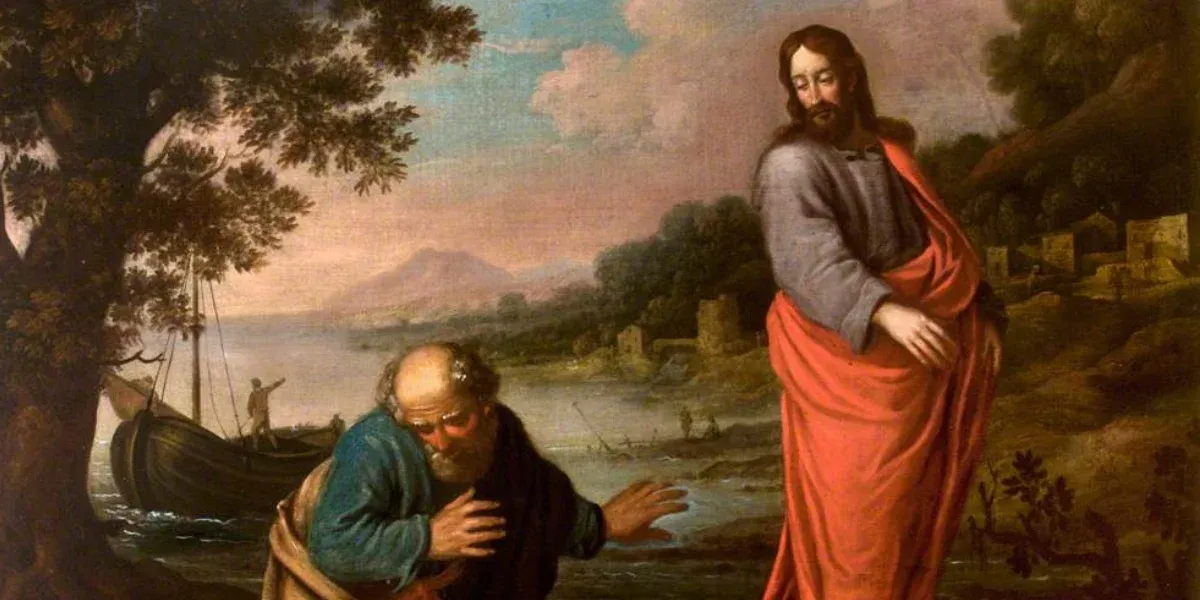
Then the Gospel makes the same point even more dramatically. Last Sunday Peter confessed that Jesus is the Christ, the Son of the living God. Jesus accepted his confession, but immediately began to explain what being the Messiah actually meant. He would go to Jerusalem. He would suffer. He would be killed. He would be raised on the third day. Peter cannot accept this. “God preserve you, Lord!” he says. “This must not happen to you.” Jesus' response is astonishingly severe: “Get behind me, Satan.” The same Peter who has just been called the rock upon which Christ will build His Church is now addressed as an adversary. Why? Because Peter wants to save Jesus from the Cross. He wants a Messiah who will succeed according to ordinary human expectations. Jesus knows that the Father's plan is different. The Cross is not an unfortunate accident that happens to interrupt Christ's mission. It is the very path by which He fulfils it. And therefore Jesus immediately applies the same principle to His disciples: “If anyone wants to be a follower of mine, let him renounce himself and take up his cross and follow me.”
Also we should be careful here. Christianity is not a religion which teaches us to go looking for pain, nor does it glorify illness, misery or misfortune for their own sake. Jesus Himself healed the sick and relieved human suffering whenever He encountered it. The Cross is, more fundamentally, obedience to the Father. That obedience may involve suffering, but suffering and the Cross are not identical. To take up one's cross therefore means to accept the demands of following Christ even when they contradict our own preferences. It means allowing God's will to correct our ambitions, our habits and sometimes even our carefully constructed ideas about what a Christian life ought to look like. “Renounce yourself” does not mean destroy your personality. It means renounce whatever in yourself is contrary to Christ. And “follow me” means precisely that: let Jesus remain ahead of you. The disciple follows; the disciple does not instruct the Master where He ought to go. Peter's mistake was not that he loved Jesus too much. It was that he loved Him while still imagining that he knew better than Jesus what His mission should be.
When obedience becomes service
There is, perhaps, a lesson here that we particularly need. There are two distorted ways of understanding Christian life. The first is a kind of cult of suffering. But there is another distortion: the idea that because we belong to God, nothing genuinely painful should ever happen to us. These two are not of the Gospel. The Christian ideal is neither constant suffering nor perpetual earthly success. It is faithful obedience. Sometimes obedience leads to joy. Sometimes it leads through difficulty. What matters is not whether our lives conform to our preferred plan, but whether they conform to God’s. This is particularly worth remembering as summer draws to a close. The final Sunday of August has its own quiet symbolism. Holidays end, schools prepare to reopen, work resumes, parishes become busy again and ordinary responsibilities return. We may ask ourselves: What are we returning to? Perhaps the Christian answer should be more than simply: “back to work again”. We return to our ordinary lives with a renewed intention to offer those lives to God. Our work, family responsibilities, decisions, relationships, frustrations and successes: all these can become part of the “living sacrifice” of which St Paul teaches.
Perhaps that is the message with which we should enter September. We do not know what the coming months will bring. Some of us will experience joy; others disappointment. Some will encounter health and strength; others illness or bereavement. Some will see plans succeed; others will watch carefully constructed hopes collapse. The Gospel does not promise that none of these things will happen. It promises something better: that none of them need separate us from Christ. The question for the coming weeks therefore is: “Lord, what do You ask of me now?” That is the question of Jeremiah. It is the question of Paul. It is the question also Peter had to learn the hard way. And as we return from the relative quiet of summer to the ordinary demands of September, perhaps we should return with one simple resolution: not to demand that God arrange life according to our plans, but to learn to recognise His will within the life He has given us.
For the followers of Christ, the Cross is not the glorification of suffering. It is the freedom of saying yes to God. And once we have learned that, even the difficult road becomes a road worth walking—because we are no longer walking it alone.
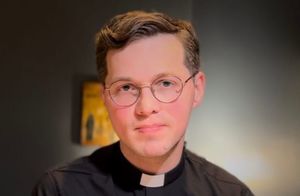
Fr. Dominik Domagala acquired a Master's in History of Liturgy and obtained a Licentiate in Sacred Scripture at St Patrick’s College in Maynooth. His main interests concern the OT and Books of Maccabees. He is the author of “The Social Sermon” blog on Facebook, Instagram and YouTube. Check out more at the website: thesocialsermon.com