Mass Readings:
- Isaiah 55:1-3
- Romans 8:35, 37-39
- Matthew 14:13-21
Modern advertising has an uncanny ability to appeal to our deepest anxieties. "Don't leave your family unprotected," one life insurance advertisement urges. "Take out a policy today." There is, of course, a certain wisdom in making sensible provision for those we love. Yet one cannot help feeling that there is something profoundly inadequate about reducing life's greatest tragedy to a financial calculation. Can money ever compensate for the loss of a husband, a wife, a parent or a child? This Sunday's Scriptures also speak about security—but of a very different kind. God offers no guarantee that we shall never suffer illness, disappointment or bereavement. He promises something infinitely greater: that those who entrust themselves to Him will never lose the only treasure that truly matters: God’s covenant which never fades. It is fitting, therefore, that the Church celebrates Saint John Mary Vianney this coming Tuesday. Throughout his remarkable ministry in the little village of Ars, the Curé spent countless hours in the confessional listening to people burdened by every imaginable anxiety—family troubles, financial worries, guilt, sickness and fear of the future. He did not dismiss those concerns, nor did he pretend that life would suddenly become easy. Instead, he gently directed people towards the only security that survives death itself: friendship with Jesus Christ. That is precisely the invitation echoed throughout today's readings.
Learning to Hunger for What Truly Satisfies (Isaiah 55:1-3)
In the First Reading, prophet Isaiah addresses his people who have lived in exile for generations. Many had never even seen Jerusalem. Babylon, despite being the land of captivity, had become familiar. Families had established homes and livelihoods. The thought of returning to a ruined city, whose walls lay in ruins and whose Temple no longer stood, seemed to many an unnecessary risk. Into that comfortable captivity the prophet proclaims an extraordinary invitation: "Come to the water... Buy corn without money, and eat, and, at no cost, wine and milk.” The words sound almost too good to be true. God promises abundance without payment, satisfaction without endless labour. Yet immediately He asks a searching question: "Why spend money on what is not bread, your wages on what fails to satisfy?” At first sight the question appears puzzling. Surely people must work if they are to eat. Yet Isaiah is speaking on an altogether deeper level. The prophet is not condemning honest labour. Rather, he exposes the illusion that lasting security can be achieved by human effort alone. Israel had invested its hopes in the stability of Babylon while neglecting their God who alone could restore its true freedom. They had become accustomed to surviving instead of truly living. How contemporary that temptation remains. Our own generation spends immense energy pursuing financial stability, professional success and personal comfort. None of these things is wrong in itself. Indeed, they often represent responsible stewardship. But the question posed by Isaiah still echoes through every age: are we ultimately investing our lives in what can truly satisfy, or merely in what temporarily distracts us from our deeper hunger? The exiles who accepted God's invitation did not return to an easy existence. Rebuilding Jerusalem demanded sacrifice, perseverance and courage. Yet they returned home. More importantly still, they preserved the covenant through which, centuries later, the promised Messiah would be born. What if God's invitation leads not towards greater comfort, but towards greater freedom?
The Love That Nothing Can Defeat (Romans 8:35, 37-39)
Saint Paul's magnificent conclusion to the eighth chapter of the Letter to the Romans carries this promise even further. Few passages in the New Testament breathe such confidence: "Nothing can come between us and the love of Christ.” Paul does not deny the reality of suffering. Quite the opposite. He lists hardship, distress, persecution, famine, nakedness, danger and even the sword. The Christian life is no exemption from pain. Yet none of these realities possesses the final word.
The Apostle's astonishing claim is that absolutely nothing can break the bond established between Christ and those who belong to Him. This marks the difference between worldly security and Christian hope. The world seeks guarantees that tomorrow will resemble today. The Gospel offers something incomparably greater: the assurance that whatever tomorrow may bring, Christ will already be there. The insurance policies upon which society so often relies eventually reach their limits. Savings may disappear, health may fail and even the strongest human relationships are touched by death. God's love alone remains beyond every earthly uncertainty. That is why Saint Paul can write with such serene confidence. Christians do not place their trust in favourable circumstances but in the unwavering fidelity of God Himself. The Curé of Ars understood this better than most. People arrived at his confessional carrying burdens they believed impossible to bear. They often departed without any outward change in their circumstances. Yet they left transformed because they had rediscovered the certainty that mattered most: they were loved, forgiven and never abandoned by Christ. That truly remains the greatest security any human heart can ever possess.
Bread for the Journey (Matthew 14:13-21)
The Gospel presents one of the best-known miracles in the New Testament: the feeding of the five thousand. At first sight, it appears simply to be an extraordinary act of compassion. Jesus sees a hungry crowd, has pity on them, heals their sick and provides them with food. His compassion is indeed real. Before multiplying the loaves, Matthew tells us that Jesus "took pity on them" and cured those who had been brought to Him. This detail is worth lingering over. We sometimes fall into the mistaken belief that suffering is something God positively desires for us. The Gospel reveals something rather different. Christ does not delight in human suffering. He allows it within His providence, yet He never ceases to be moved by it. The tears of His people are never a matter of indifference to Him. The miracle itself, however, reaches far beyond the immediate needs of the crowd. Matthew deliberately echoes the story of Israel's journey through the wilderness. Just as God fed His people with manna during the Exodus, Jesus now feeds a new people in a deserted place. He reveals Himself as the new Moses, leading a new Exodus towards the Kingdom of God.
There is another detail that the early Church never overlooked. Matthew describes Jesus taking the loaves, blessing them, breaking them and giving them to His disciples. These are precisely the actions that will reappear at the Last Supper. The miracle therefore points beyond itself to the Eucharist, where Christ continues to feed His pilgrim people with the Bread of Life. This is why the miracle is not simply about satisfying physical hunger. Had that been the only purpose, Jesus could simply have sent the crowds into the neighbouring villages to buy food, as the disciples suggested. Instead, He reveals a deeper truth: those who follow Him discover that God Himself provides what is truly necessary for the journey. That does not mean Christians will never know poverty, illness or hardship. Saint Paul has already made that abundantly clear. Rather, it means that none of these trials should ever be interpreted as evidence that God has abandoned His children. His providence often works quietly, sometimes in unexpected ways, but it never ceases to accompany those who trust Him.
Ordering Our Priorities
There is no amount of money capable of guaranteeing complete security. Savings may disappear through economic upheaval. Health cannot always be restored by wealth. Relationships cannot be preserved by careful planning alone. Even the most prudent preparations eventually reach their limits. The question posed today is therefore where we ultimately place our confidence? Do we seek security first in Christ and allow every other concern to find its proper place beneath Him? Or do we organise our entire lives around material guarantees while leaving the Gospel somewhere at the margins? Jesus' command to His disciples remains quietly challenging: "You give them something to eat.” Those words are addressed to the Church in every generation. Christians cannot hear the Gospel of divine generosity without becoming generous themselves. Wherever people lack bread, dignity, hope or companionship, the disciples of Christ cannot simply send them away. The Lord still chooses to place His gifts into human hands before they reach those in need.
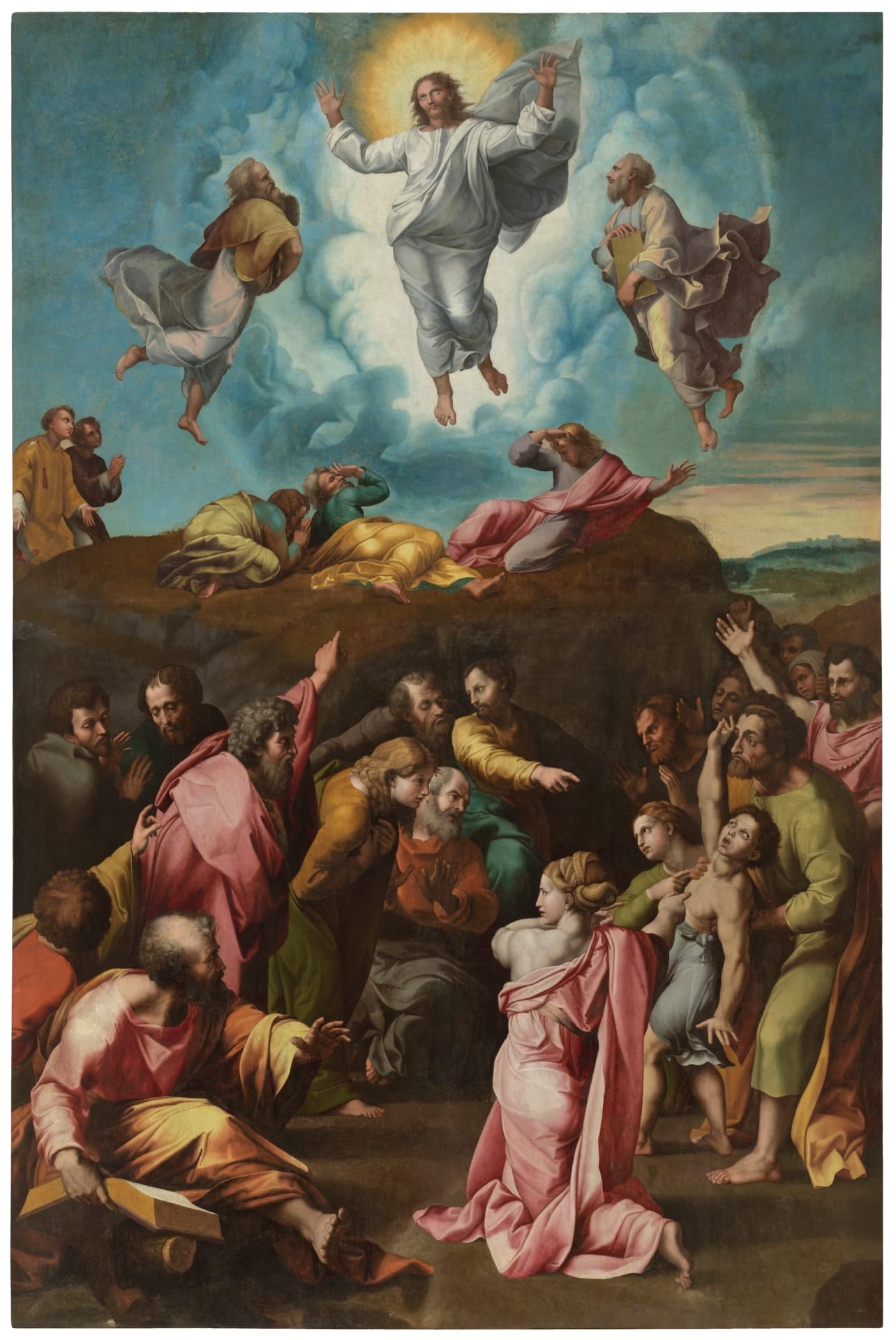
This coming Thursday we will celebrate the Feast of the Transfiguration of the Lord. The connection with today's Gospel is profound. The same Lord who feeds hungry crowds in the wilderness is the Lord whose face shines with divine splendour upon the mountain. He nourishes His people not merely so that they may survive another day, but so that they may reach the glory He has prepared for them. Every miracle, every act of mercy and every celebration of the Holy Mass points ultimately towards that eternal communion where every hunger will finally be satisfied. This brings us back to Saint John Mary Vianney. The Curé of Ars never promised his parishioners an easy life. He knew too well that every Christian must carry the cross. Yet he also knew that no earthly hardship could compare with the joy of belonging to Christ. His countless hours in the confessional were devoted to helping ordinary men and women recover the one treasure that could never be lost: the grace of God. Perhaps that is the greatest lesson of this Sunday's readings. We spend much of our lives searching for guarantees against an uncertain future. Christ offers something infinitely better. He does not promise a life without suffering. He promises His unfailing presence within it. He feeds us with His own life, strengthens us for the journey and assures us that nothing—not hardship, nor hunger, nor persecution, nor even death itself—will ever separate us from His love. That is the only security that never fails.
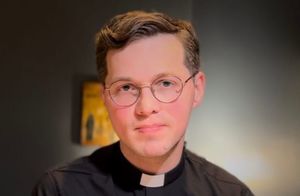
Fr. Dominik Domagala acquired a Master's in History of Liturgy and obtained a Licentiate in Sacred Scripture at St Patrick’s College in Maynooth. His main interests concern the OT and Books of Maccabees. He is the author of “The Social Sermon” blog on Facebook, Instagram and YouTube. Check out more at the website: thesocialsermon.com