Mass Readings:
- Zechariah 9:9-10
- Romans 8:9, 11-13
- Matthew 11:25-30
Anyone who has ever worked for some time in the countryside knows the quiet strength of a donkey. It will never win a race. It does not impress anyone by its appearance. Yet it patiently carries burdens day after day without demanding attention. It is curious, then, that when God wanted to reveal the kind of King He was sending into the world, He chose precisely such an animal. Not the horse of a conqueror, but the donkey of an ordinary labourer. It is almost as though God were saying from the very beginning: "If you want to understand My Kingdom, you must first unlearn what the world calls greatness.” Indeed, we instinctively admire strength, influence and success. Yet God repeatedly chooses humility, trust and apparent weakness. We seek security through power, but He brings salvation through self-giving love. We are impressed by the clever and the influential; He entrusts His greatest mysteries to the humble of heart. The readings this Sunday invite us not simply to believe in God, but to learn to think as He thinks.
The King Nobody Expected (Zechariah 9:9-10)
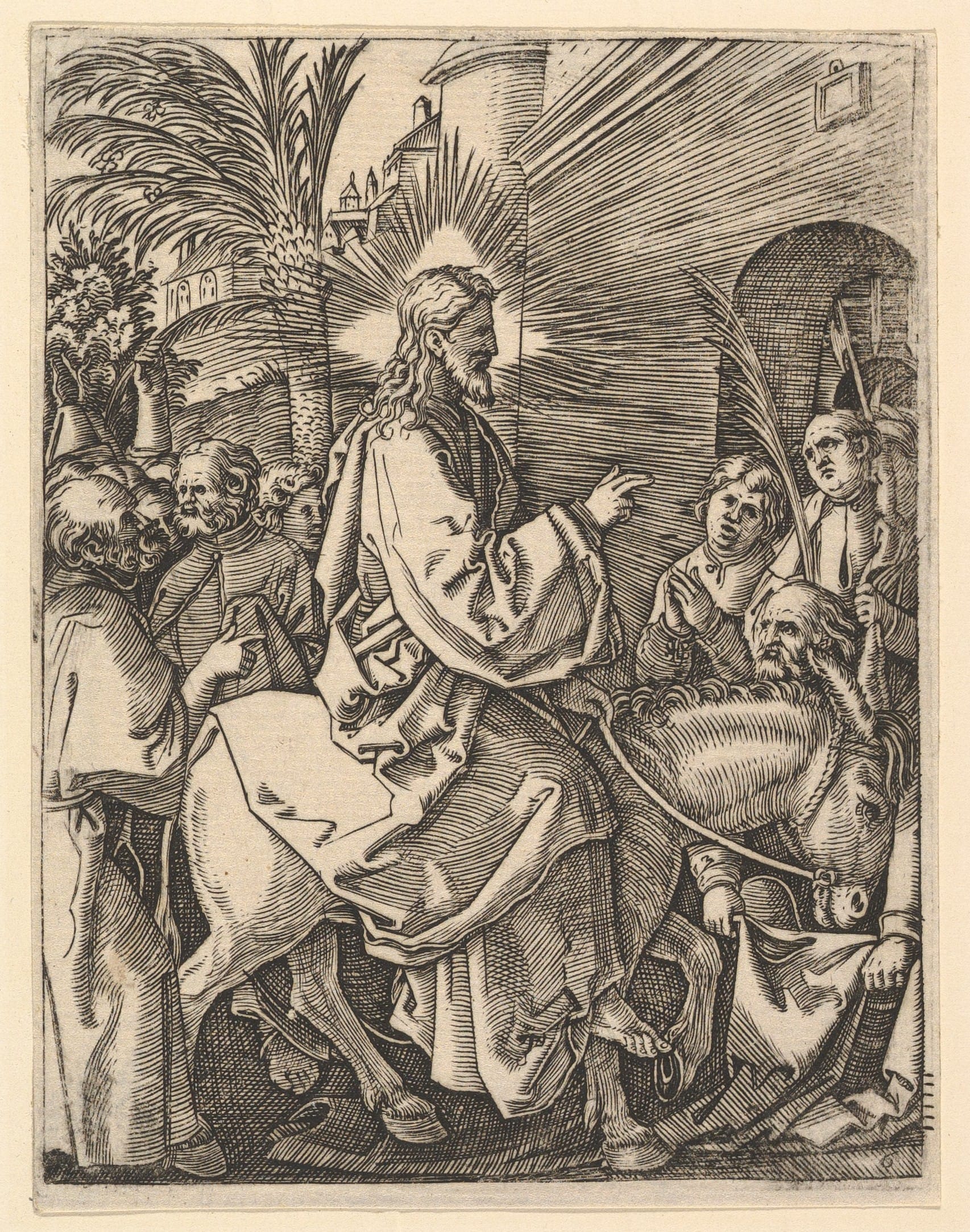
The prophecy of Zechariah was spoken at a time when Israel longed for restoration after the trauma of exile. The people dreamed of a king who would restore their fortunes, defeat their enemies and establish lasting peace. Their hopes were understandable. Every nation that has suffered oppression longs for a powerful ruler. Into that expectation comes one of the most surprising images in the Old Testament: "Your king comes to you; he is victorious, he is triumphant, humble and riding on a donkey.” Nothing could have sounded more unusual. Ancient kings rode horses into battle. Chariots represented military superiority. Victorious rulers displayed their power through impressive processions and overwhelming force. Yet Zechariah announces a king who deliberately rejects all the symbols of earthly domination. He comes not on a war horse but on a beast of burden. Even more striking, he destroys not his enemies first but the instruments of war themselves: chariots, horses and battle bows. His victory consists in establishing peace rather than imposing submission. Centuries later Jesus consciously fulfils this prophecy when He enters Jerusalem on Palm Sunday. The crowds expect a political liberator. Instead they receive the Messiah whose throne will be a Cross. This remains one of Christianity's greatest challenges. We repeatedly try to defend Christ's Kingdom using methods that belong to earthly kingdoms. Throughout history Christians have sometimes forgotten that the Gospel advances not by coercion but by conversion, not through domination but through witness. The Kingdom of God cannot be imposed. It can only be welcomed. Also today we are tempted to believe that influence, aggressive rhetoric or political victory will somehow secure the Gospel. Yet Christ continues to ride into the world on a donkey.
Learning to Live by the Spirit (Romans 8:9, 11-13)
Saint Paul explains why such a kingdom appears so strange to us. His contrast between living "according to the flesh" and living "according to the Spirit" is often misunderstood. He is not opposing the human body to the soul. Rather, he contrasts two entirely different ways of living. To live according to the flesh is to place ultimate trust in oneself—to believe that security, success and happiness depend primarily upon our own strength, our own calculations and our own control. To live according to the Spirit is something altogether different. It means allowing God to become the centre from which every decision flows. It is to discover that real freedom begins precisely when we stop making ourselves the measure of everything. The Spirit dwelling within the believer is not merely a comforting presence. Saint Paul reminds us that the same Spirit who raised Christ from the dead now lives within His disciples. Already now, even before the final resurrection, Christians participate in that new life. This sheds fresh light on Zechariah's humble king. Human reasoning says that ruling means conquering. But the Spirit teaches that ruling means serving.
The Wisdom Hidden from the Wise (Matthew 11:25-30)
Perhaps nowhere does God's surprising way of acting become clearer than in today's Gospel. Jesus lifts His eyes to heaven and offers one of the most beautiful prayers recorded in the New Testament: "I bless you, Father, Lord of heaven and of earth, for hiding these things from the learned and the clever and revealing them to mere children.” At first glance these words may sound like praise of ignorance. In reality they are nothing of the sort. The Greek word translated as "children" or "little ones" literally refers to infants—children who are still learning. Jesus is not glorifying lack of education. He is praising openness. Children learn because they know they still have much to discover. The truly dangerous attitude is not our ignorance but self-sufficiency. Again, God overturns our expectations. We often assume that the most educated, influential and sophisticated people will naturally be closest to God. Yet history repeatedly shows that simple fishermen, tax collectors and ordinary believers have recognised Christ long before many scholars did. The obstacle is not intelligence but pride. Faith begins not when we know everything, but when we become teachable. Perhaps this explains why the Gospel has often flourished among people who possess little worldly prestige. They are not burdened by the illusion of already having all the answers. They are ready to receive. Every Christian, however educated or experienced, must preserve something of this childlike openness. The moment we imagine that we have mastered God, we cease to grow in our knowledge of Him.
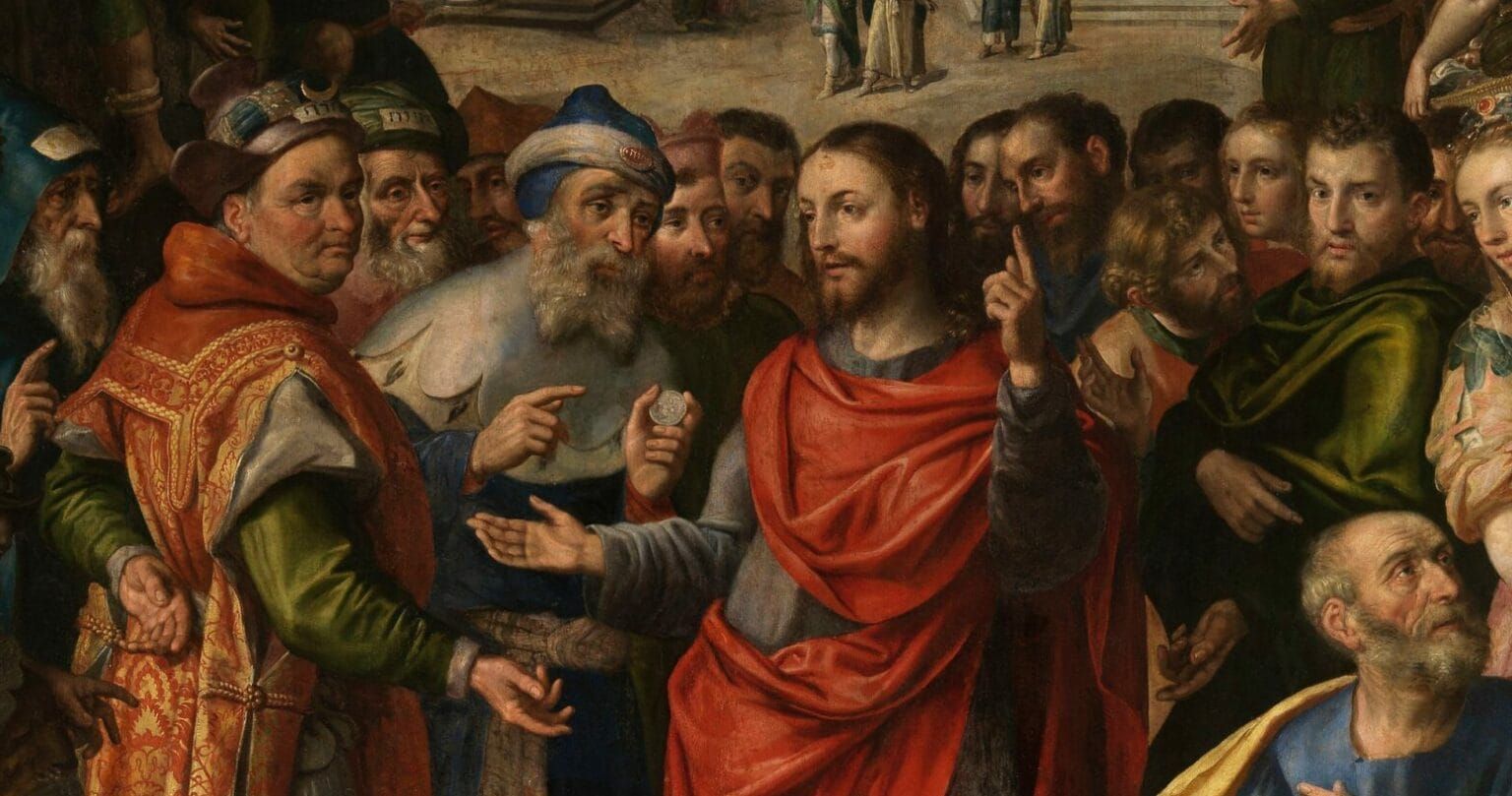
The Gospel reaches its climax in one of the best-loved invitations in Scripture: “Come to me, all you who labour and are overburdened, and I will give you rest.” These words are frequently understood as an invitation addressed to people exhausted by life's hardships. They certainly include them. Yet within the context of Matthew's Gospel, Jesus speaks particularly to those who have become weary beneath the weight of countless religious obligations. Many ordinary Jews struggled to satisfy the increasingly detailed interpretations of the Law. They could never feel they had done enough. The burden grew heavier with every new regulation. And Jesus offers something radically different: ”My yoke is easy and my burden light.” The image becomes especially beautiful once we remember what a yoke actually was. It was never designed for one animal alone. A yoke joined two animals together so that they shared the work. Christ does not simply hand us another burden. He places Himself beneath it with us. Christianity is often presented as a list of demands. Certainly the Gospel makes demanding claims. Love your enemies. Forgive seventy times seven. Carry your cross. Yet these commands are never given in isolation. Christ Himself bears the weight alongside His disciples. The yoke is light not because there is no burden, but because we never carry it alone. Interestingly, the Greek text contains a subtle play on words. The word translated as "kind" or "sweet" (chrestos) closely resembles the word Christos. The yoke is gentle because it is Christ's own yoke.
There is a phrase we hear repeatedly today: "That may have worked once, but it no longer works.” People say it about forgiveness, lifelong fidelity, honesty in business, openness to life, Christian morality or responding to hatred with love. "It cannot be done.” The world has always spoken that way. Yet every generation of saints quietly proves otherwise. Not because they possess extraordinary strength, but because they have accepted Christ's invitation to walk beside Him. The deeper challenge of today's readings is therefore not whether we agree with Christ's teaching. It is whether we have allowed His way of thinking to become our own. God's logic remains profoundly different from ours. He chooses the donkey over the war horse, the child over the self-assured scholar, the servant over the conqueror, the Cross over the sword. And still we often resist. We instinctively believe that louder voices persuade better than quiet witness, that power achieves more than humility, that winning arguments matters more than winning hearts. Perhaps the greatest obstacle to evangelisation today is not secularism but the impression that Christians themselves have forgotten the character of their King. Whenever we mirror the aggression, fear or bitterness of the surrounding culture, we obscure the face of the One who entered Jerusalem riding on a donkey. The world does not need disciples who imitate its methods while speaking Christian words. It longs—often without realising it—for men and women whose lives reflect the surprising logic of Christ. That is God's way, and it always has been.
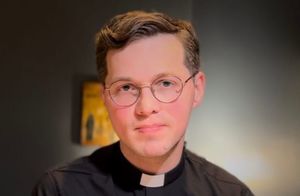
Fr. Dominik Domagala acquired a Master's in History of Liturgy and obtained a Licentiate in Sacred Scripture at St Patrick’s College in Maynooth. His main interests concern the OT and Books of Maccabees. He is the author of “The Social Sermon” blog on Facebook, Instagram and YouTube. Check out more at the website: thesocialsermon.com