
Mass Readings:
- Isaiah 56:1, 6-7
- Romans 11:13-15, 29-32
- Matthew 15:21-28
Every year, on 17 August, countless Irish pilgrims turn their hearts towards Knock. Many of them cannot think of the shrine without quietly recalling the familiar hymn: "There were people of all ages, gathered round the gable wall, poor and humble men and women, little children…"
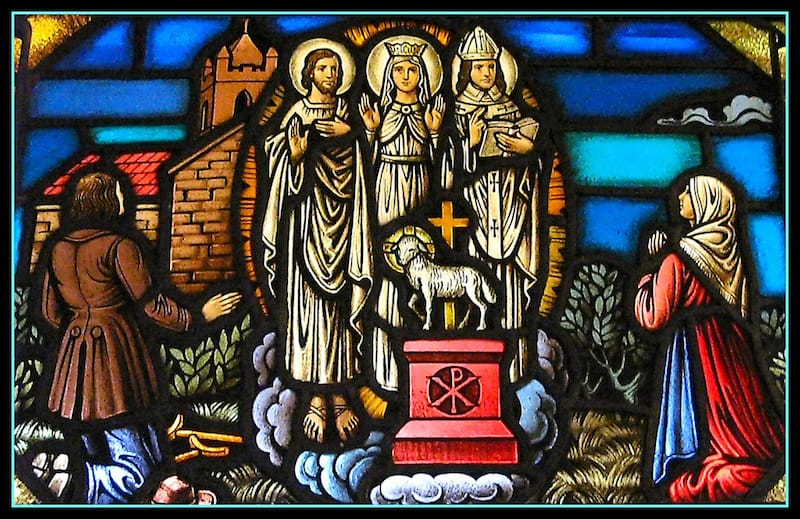
Perhaps that is why the Apparition at Knock has remained so deeply engraved in the soul of Ireland. There were no recorded words, no dramatic warnings, no extraordinary commands. Instead, there was a silent invitation. Mary stood beside St Joseph and St John, while the Lamb of God, standing upon the altar, drew every eye towards Himself. The message was simple yet profound: all are invited to Christ. That same invitation echoes through this Sunday's readings.
Isaiah announces that God's house is to become "a house of prayer for all peoples." St Paul wrestles with the mystery of Israel and the Gentiles, only to conclude that God's mercy embraces them both. Finally, in the Gospel, Jesus praises the extraordinary faith of a woman who, according to every human expectation, ought to have remained outside the covenant altogether.
It is remarkable that the Church celebrates Our Lady of Knock on the very day after this Sunday. The coincidence could hardly be more fitting. As the hymn beautifully expresses it, "your message is unspoken, but the truth in silence lies."Mary's silent witness directs every pilgrim towards the same truth proclaimed by today's Scriptures: no one who comes to Christ in faith is turned away.
God's House Was Always Meant for the Nations (Isaiah 56:1, 6-7)
The first reading comes from the final section of the Book of Isaiah, often called Third Isaiah. The setting is important. The Babylonian exile is drawing to its close, and hope is beginning to dawn. Jerusalem, though scarred and broken, is preparing for restoration. Yet another challenge is emerging among God's people. After years of suffering, many Israelites were tempted to think of themselves as an exclusive community. Their election by God, which had originally been intended as a mission, risked becoming a privilege jealously guarded. The people chosen to become a blessing for all nations were in danger of forgetting the universal purpose of their vocation. Isaiah speaks directly into that temptation.
Foreigners who bind themselves to the Lord are no longer to regard themselves as outsiders. Even those who, under the old ritual law, had every reason to believe they had no place among God's people are now welcomed. God's promise is astonishing: "My house shall be called a house of prayer for all peoples.” This was a revolutionary vision. Israel had indeed been chosen, but never for its own sake alone. God's covenant with Abraham always pointed beyond one nation towards the salvation of the whole world. Centuries later, Jesus Himself would quote precisely these words while cleansing the Temple. What Isaiah foresaw was becoming reality.
For Christians today the message remains deeply relevant. We often imagine that someone's past places them beyond God's mercy. We quietly conclude that certain people will never return to the Church, never rediscover faith, never change. Isaiah refuses such pessimism. Neither birth nor background, neither previous failures nor painful life circumstances can prevent someone from entering God's household. The only closed door is the one a person chooses to keep shut from the inside.
St Paul's Pain—and His Hope (Romans 11:13-15, 29-32)
This universal vision continues in St Paul's Letter to the Romans. Few passages reveal the Apostle's heart more vividly than these chapters. Paul is writing as a man torn between immense gratitude for Christ and profound sorrow for his own people. Israel received the covenants, the Law, the prophets and, above all, the Messiah Himself. Yet many had failed to recognise Him. It would have been easy for Paul to become bitter. Instead, he grieves. His love for Israel remains unmistakable. Yet he also recognises that God's saving plan has not failed. The temporary rejection of the Gospel by many Jews has opened the door for the Gentiles. This does not mean that God has abandoned Israel. On the contrary, Paul insists that "the gifts and the calling of God are irrevocable." God's fidelity never wavers, even when human beings are unfaithful.
His conclusion is breathtaking in its simplicity: "God has imprisoned all in disobedience so that He may be merciful to all.” Notice that final word: all. The same God who chose Israel now reaches out to every nation. His purpose has never been exclusion but inclusion. His justice always serves His mercy. That conviction should shape the way Christians look at the world.
It is surprisingly easy to divide humanity into categories: believers and unbelievers, practising Catholics and those who have drifted away, people like us and people unlike us. Once such divisions take root, hope quietly disappears. We begin to write people off. Paul refuses to do so. He never stops praying for those who reject Christ. He never ceases believing that God's grace can still touch their hearts. If the Apostle could hope for Israel after everything that had happened, surely we should never despair of our own children, relatives, neighbours or friends who seem distant from the faith today.
Perhaps this is one of the greatest lessons Our Lady of Knock quietly teaches us. The vision gathered together ordinary people—young and old, rich and poor, learned and simple—not because they were perfect, but because they were willing to stand before the Lamb of God. Mary's silence reminds us that she does not draw attention to herself. She simply gathers people around Christ, whose mercy remains greater than every human failure.
Next Sunday, the Gospel will show us that this divine welcome is not merely an abstract theological principle. It has a human face—that of a Canaanite mother whose courageous faith breaks through every barrier and whose persistence reveals that God's mercy reaches far beyond the boundaries people so often try to impose.
A Foreign Woman Who Became an Example of Faith (Matthew 15:21-28)
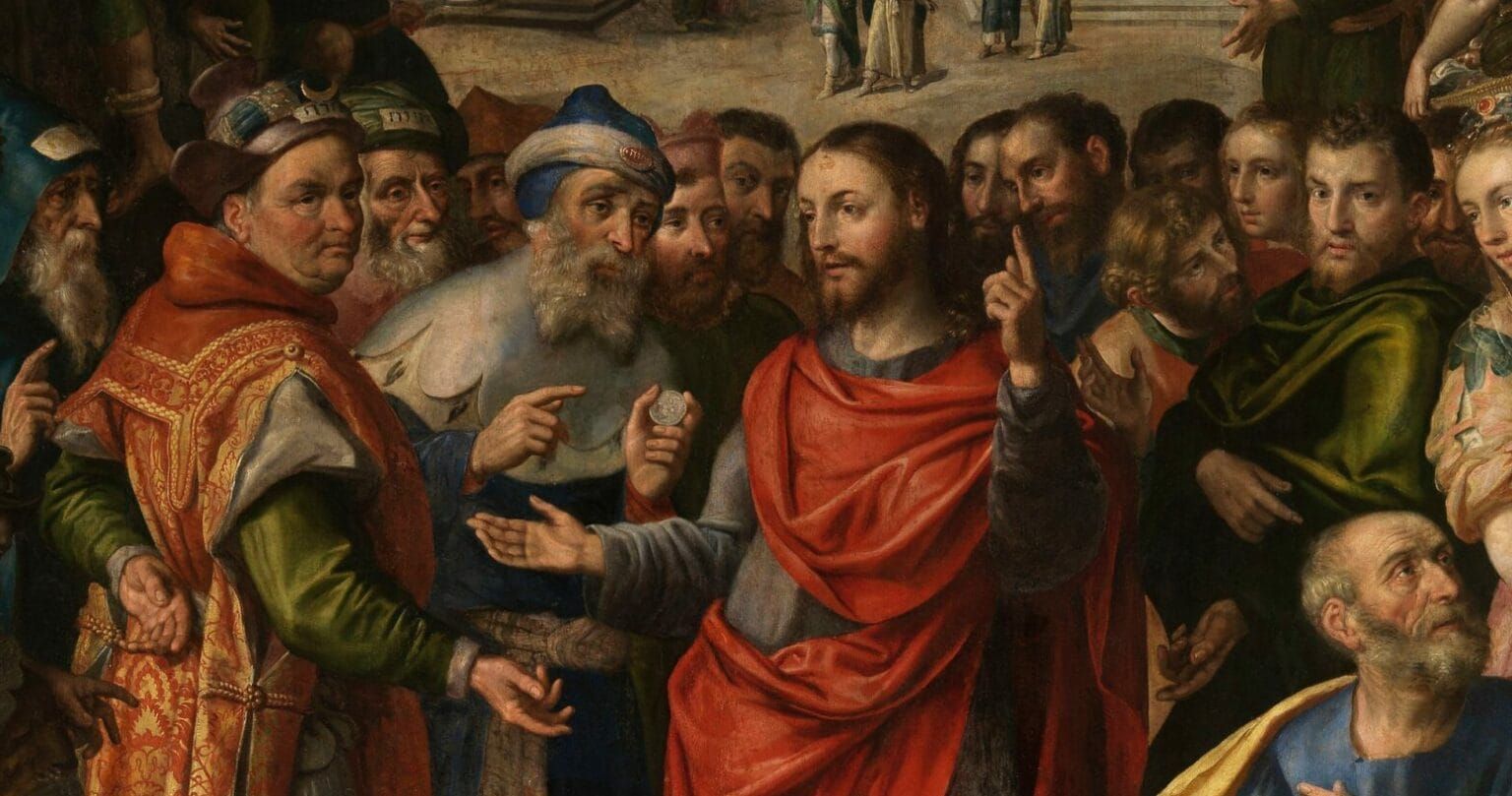
The Gospel brings Isaiah's prophecy and St Paul's reflections to life. Jesus leaves Galilee and enters the region of Tyre and Sidon, pagan territory. There He is approached by a Canaanite woman whose daughter is tormented by a demon. Everything about her places her outside the visible boundaries of God's chosen people. She is not an Israelite. She has no claim upon the promises given to Abraham. Yet she possesses something many within Israel have lost: unwavering faith. At first, Jesus appears to refuse her request. His words sound almost harsh: "I was sent only to the lost sheep of the house of Israel." Then comes the striking image of the children's bread and the dogs. Yet the woman is neither offended nor discouraged. Instead, she accepts Jesus' image and transforms it into a plea of extraordinary humility: "Even the dogs eat the crumbs that fall from their masters' table.” It is one of the most remarkable conversations in the Gospels.
Her faith is evident in several ways. She addresses Jesus as "Lord, Son of David," recognising Him as Israel's promised Messiah. She believes completely in His power to heal, even from a distance. She does not ask for spectacular signs or demand explanations. Above all, she perseveres. Refusal does not destroy her trust; it deepens it. Jesus responds with words He rarely speaks to anyone: "Woman, great is your faith!”
What a contrast with so many religious leaders of His own day. Those who possessed the Scriptures often refused to recognise the Messiah standing before them. This foreign woman, with far less knowledge, sees more clearly because she approaches Christ with humility and confidence. Here the Gospel reaches the heart of this Sunday's message. Belonging to God's people has never been merely a matter of birth, culture or tradition. It has always required faith. The Church is not simply a community inherited by birth; it is a community entered through a living encounter with Jesus Christ.
That remains a timely lesson for our generation. It is entirely possible to be formally Catholic while living at a distance from Christ. Equally, someone who appears far from the Church may already be taking the first steps towards Him through a sincere search for truth. God sees hearts before He sees labels.
Learning to See as God Sees
What does all this mean for us? Firstly, it means we should never give up on anyone. How quickly we decide that certain people will never change: the relative who abandoned the faith years ago, the colleague openly hostile to Christianity, the neighbour who seems indifferent to God. Today's readings challenge that judgement. God has not abandoned them. Neither should we. Secondly, today's Gospel teaches us perseverance in prayer. The Canaanite woman refuses to surrender. Her prayer is simple, persistent and humble. Every parent praying for a son or daughter who has drifted away from the Church can recognise something of themselves in her. Every husband or wife praying for the conversion of a loved one can find hope in her example. Faith does not always receive an immediate answer. But authentic faith never ceases to trust. Finally, these readings invite us to examine ourselves. Why do we belong to the Church? Is it simply because we were baptised, because our parents were believers, because Catholicism forms part of our family tradition? Or have we, like the Canaanite woman, personally entrusted our lives to Christ? Tradition is a precious gift. But it must become a personal decision.
Perhaps this is why the Church celebrates Our Lady, Mother and Queen later this same week. Mary's queenship is unlike every earthly form of power. She reigns not by excluding but by gathering. As Mother of the Church, she continually brings people—saints and sinners alike—to her Son. That is precisely what pilgrims experience at Knock. The famous hymn concludes: "The Lamb will conquer, and the Woman clothed in the sun will shine her light on everyone.” How beautifully those words summarise today's liturgy.
Isaiah sees God's house open to every nation. St Paul proclaims that God's mercy extends to all. Jesus praises the faith of a woman whom many would have dismissed as an outsider. Mary, standing silently beside the Lamb at Knock, points every pilgrim towards that same universal invitation. No one is beyond the reach of God's grace. No family member should ever be written off. No nation, no culture, no sinner is excluded from the hope of salvation if they are willing to come to Christ in faith. Perhaps that is why Irish pilgrims still continue to sing for generations: "Golden Rose, Queen of Ireland, all our cares and troubles cease, as we kneel with love before you, Lady of Knock, my Queen of Peace.”
True peace is not found because every problem has disappeared. It comes from knowing that Christ has opened His Kingdom to all who seek Him with faith. Like the Canaanite mother, like the pilgrims of Knock, and like Mary herself, we are invited simply to kneel before the Lamb of God—and to trust that His mercy is always greater than our fears, our failures, and every barrier we imagine stands between ourselves and Him.
Fr. Dominik Domagala acquired a Master's in History of Liturgy and obtained a Licentiate in Sacred Scripture at St Patrick’s College in Maynooth. His main interests concern the OT and Books of Maccabees. He is the author of “The Social Sermon” blog on Facebook, Instagram and YouTube. Check out more at the website: thesocialsermon.com