

Mass Readings:
- 1 Kings 3:5, 7-12
- Romans 8:28-30
- Matthew 13:44-52
Prudence has sometimes acquired an undeservedly poor reputation. We occasionally hear it described as little more than cautious indecision or even a respectable disguise for cowardice. Certainly, there are moments when excessive caution becomes an obstacle rather than a virtue. A person may postpone necessary decisions, attempt to keep every possible option open, and in doing so lose precisely those opportunities that demanded courage. True prudence is something altogether different. It is the wisdom to recognise what matters most and then to commit oneself to it wholeheartedly. It knows that life eventually presents choices that cannot be postponed indefinitely. One cannot pursue every ambition, embrace every opportunity or serve every master. At decisive moments, wisdom demands that everything be placed upon the one treasure that truly endures. That is precisely the lesson which unites this Sunday's Scriptures.
Solomon's Extraordinary Request (1 Kings 3:5, 7-12)
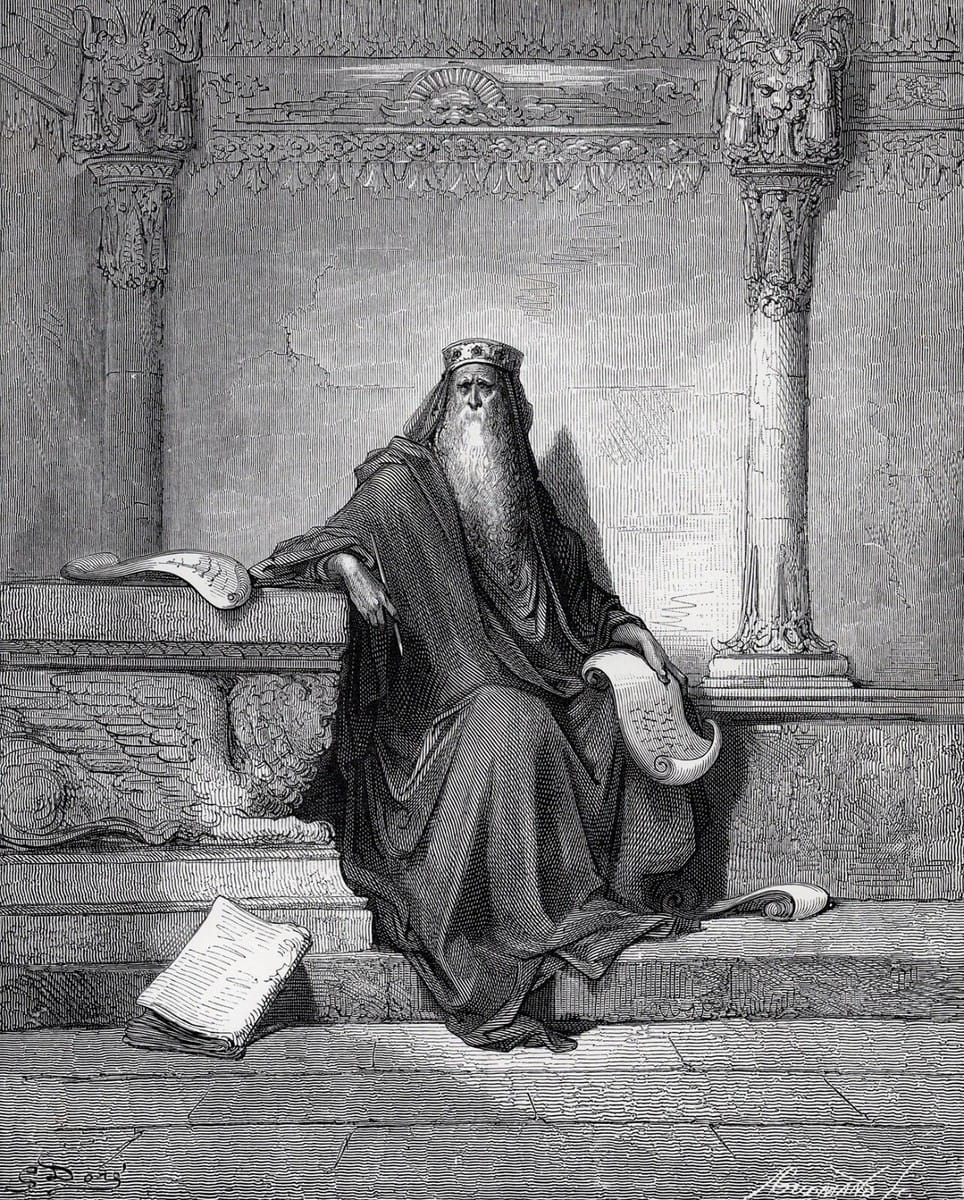
The First Reading transports us to the opening years of King Solomon's reign. The biblical narrative does not present an idealised monarch stepping effortlessly onto the throne. Quite the contrary. Solomon inherited a kingdom marked by political intrigue, rival claims to the succession and painful decisions that accompanied the consolidation of royal authority. The Scriptures are refreshingly honest. They never conceal the imperfections of those through whom God chooses to work. Solomon himself emerges from a complicated and, at times, deeply troubling chapter in Israel's history. Yet God's providence continues to unfold through imperfect instruments. It is against this background that Solomon journeys to Gibeon, then one of Israel's principal places of worship, where he offers sacrifice to the Lord. During the night, God appears to him with an astonishing invitation: "Ask what you would like me to give you?” Few moments in Sacred Scripture reveal the human heart so clearly. Solomon might have asked for military success, political security, wealth, influence or a long life. Instead, he asks for “a heart to understand,” capable of distinguishing good from evil, so that he might govern God's people wisely. His request delights the Lord. Why? Because Solomon places service before self-interest. He understands that authority exists not for personal advancement but for the good of those entrusted to his care. Wisdom, in the biblical sense, is never simply intelligence. It is the capacity to see reality as God sees it and to order one's life accordingly. The author of the First Book of Kings tells us that because Solomon sought the greater gift, God freely bestowed the lesser gifts as well: honour, prosperity and lasting renown.
Viewed in the light of today's Gospel, Solomon had already discovered the hidden treasure long before Christ ever spoke the parable. Faced with countless attractive possibilities, he chose the one gift that ordered every other blessing correctly. The Church offers us a striking illustration of this same truth during the coming week. On Friday we shall celebrate the Feast of Saint Ignatius of Loyola. Few saints have reflected more deeply upon the art of choosing wisely. The Spiritual Exercises that he composed are, above all, a school of discernment. Ignatius teaches Christians not merely to distinguish between good and evil, but between what is merely attractive and what truly leads them closer to Christ. His famous motto, Ad maiorem Dei gloriam—"For the greater glory of God"—is nothing other than Solomon's prayer translated into daily Christian living. Before asking what we desire, Ignatius invites us first to ask what God desires for us.
God Works for the Good of Those Who Love Him (Romans 8:28-30)
Saint Paul's words in the Letter to the Romans carry this same wisdom to its fullest theological depth: ”We know that by turning everything to their good, God co-operates with all those who love him, with all those he has called according to his purpose.” Paul is not suggesting that everything which happens is good in itself. Suffering remains suffering. Failure remains painful. Sin is never transformed into virtue simply by the passage of time. Rather, the Apostle proclaims something far more profound: no circumstance is beyond God's ability to draw into His saving plan.
He then presents what has often been called the "golden chain" of salvation. Those whom God foreknew, He predestined. Those whom He predestined, He called. Those whom He called, He justified. Those whom He justified, He glorified.
Remarkably, Paul even speaks of our future glory in the past tense, as though God's promise were already accomplished. Such is the certainty of divine fidelity. The one condition quietly woven into the passage is equally significant: "those who love God.” God never ceases calling every human person into communion with Himself. Yet love cannot be forced. The only obstacle to God's saving work is the freedom of the human heart to refuse Him. Here the Second Reading beautifully complements Solomon's story. The young king sought wisdom above every earthly success. Paul assures us that those who place God first never struggle alone. Divine grace accompanies them, strengthens them and quietly shapes every circumstance towards their eternal good. To choose God's Kingdom first is therefore not a philosophical gamble. It is the wisest investment a human life can ever make.
The Treasure Worth Everything (Matthew 13:44-52)
The Gospel brings Matthew's great discourse on the Kingdom of Heaven to its conclusion with three brief but unforgettable parables. A man discovers a hidden treasure in a field. A merchant finds a pearl of extraordinary value. A fisherman draws in a net filled with fish of every kind. The first two parables make essentially the same point. The Kingdom of Heaven is of such incomparable worth that everything else becomes secondary. Notice that neither man in the story regards his sacrifice as a loss. Both sell everything they possess, but they do so with joy, because they have discovered something infinitely greater. The Christian life is often misunderstood precisely at this point. We sometimes imagine that following Christ means giving things up for the sake of deprivation itself. The Gospel says something very different. We surrender lesser goods because we have found the greatest Good. This does not necessarily require abandoning family life, professional responsibilities or legitimate earthly ambitions. Most Christians are called to remain faithfully within those ordinary circumstances. Yet everything must be ordered towards the Kingdom of Heven. Career, wealth, education, leisure and even family life find their proper place only when they serve the greater purpose of leading us and those entrusted to us closer to Christ. That is where today's challenge becomes particularly searching. The greatest rival to God is not always wealth, influence or pleasure. More often it is our own ego. We instinctively place ourselves at the centre, allowing every decision to revolve around our preferences, ambitions and security. Yet the merchant in the Gospel teaches another way. To gain the pearl of great price, he first lets go of himself. Only then is he truly rich.
A Necessary Reminder
If the longer form of today's Gospel is proclaimed in your church, Christ adds a third parable—that of the dragnet cast into the sea. Its message is deliberately sobering. The net gathers every kind of fish, but only at the end are the good separated from the bad. There is a warning here that modern Christians should not overlook. It is possible to belong outwardly to the Church, to hear the Gospel regularly and even to think of oneself as a disciple, yet still fail to live according to the Kingdom one professes. Faith cannot remain merely a cultural inheritance or a respectable tradition. It must shape the whole person. For this reason, the Church should never hesitate to speak about judgement. Our age often prefers comforting words alone, as though mentioning heaven required silence about the possibility of rejecting it. Yet Christ Himself speaks openly of both. He does so not to frighten His disciples but to awaken them. Love worthy of the name always tells the truth. The same principle applies to Christian education. We do children no favour by pretending that sin and evil do not exist or that difficult moral choices can somehow be avoided. Far better to teach them, with patience and confidence, how to recognise evil, resist it and choose the good. A faith that has never faced reality is unlikely to endure when reality finally arrives.
The message of this Sunday's Scriptures may therefore be summed up in Christ's own words elsewhere in the Gospel: "Seek first the Kingdom of God.” Solomon sought wisdom before power. Saint Paul reminds us that God works in everything for those who love Him. Christ reveals the Kingdom as the treasure that surpasses every earthly possession. The choice is placed before each of us. Everything else may be added in God's providence. But only one treasure is worth building an entire life upon.
Fr. Dominik Domagala acquired a Master's in History of Liturgy and obtained a Licentiate in Sacred Scripture at St Patrick’s College in Maynooth. His main interests concern the OT and Books of Maccabees. He is the author of “The Social Sermon” blog on Facebook, Instagram and YouTube. Check out more at the website: thesocialsermon.com